Practical playbooks for teachers who sell online
Honest, tactical guides on creating and selling online courses, pricing them, teaching live, running cohorts, getting paid into your own account and building a student community — so you own your audience, control your pricing, and keep 100% of what you earn. Teaching in India? The India guides cover UPI, GST and rupee pricing.
108 guides · no hype, no false promises
More articles

Geography Micro Teaching: a Practical 2026 Guide
Geography micro teaching explained: the 5-minute lesson format, key skills, a sample plan and feedback tips for B.Ed trainees. Start practising today.

English Teaching Techniques That Actually Work in 2026
Learn english teaching techniques that work for adult and school learners, from speaking drills to lesson planning. Build your course today.

English Teaching Methods That Work for Adults in 2026
Compare English teaching methods like CLT, TBLT and the Direct Method, and learn how to pick one for your class. Plan your course today.

Content Writing Courses Online: How to Build and Sell One in 2026
Planning content writing courses online in 2026? See what students pay for, how to structure and price yours, and how to sell it. Start building today.

Online Tuition Classes in India: How to Run Them in 2026
Learn how to set up online tuition classes in India: tools, pricing, finding students and growing beyond 1:1 hours. Start teaching today.

Online Course Club: What It is & Why Educators Are Building Them
Online course clubs create recurring learning communities. I'll show you how independent educators build profitable clubs with live classes and membership model

Online Proctored Test: How It Works in 2026
What actually happens during an online proctored test? Camera recording, tab monitoring, evidence review—here's the full picture for educators.

How to sell online courses on your own website, and what "your own" really has to mean
Owning your course website means four things: the address, the payment account, the student list and an export. Here is how to get all four, what the three common setups cost, and when a marketplace is still the better start.

What are the most profitable online course topics in 2026? What the evidence shows, and how to test your own
Every list of profitable course niches you've seen was made up. Here is the demand evidence that does exist, what makes a topic pay, and how to test yours in two weeks.

How to sell online courses with low fees and full control
Low fees and full control are two separate tests. Here is the total monthly cost at $1,000, $5,000 and $20,000 in sales on every common fee model, then a checklist for the five kinds of control that matter: money, students, content, pricing and brand.

How to make money selling online courses as a beginner: the honest math of your first sales
The first money from a course comes from a handful of people who already trust you, not from a recorded course and a big launch. Here is the arithmetic, the costs and a 21-day plan for the first ten buyers.
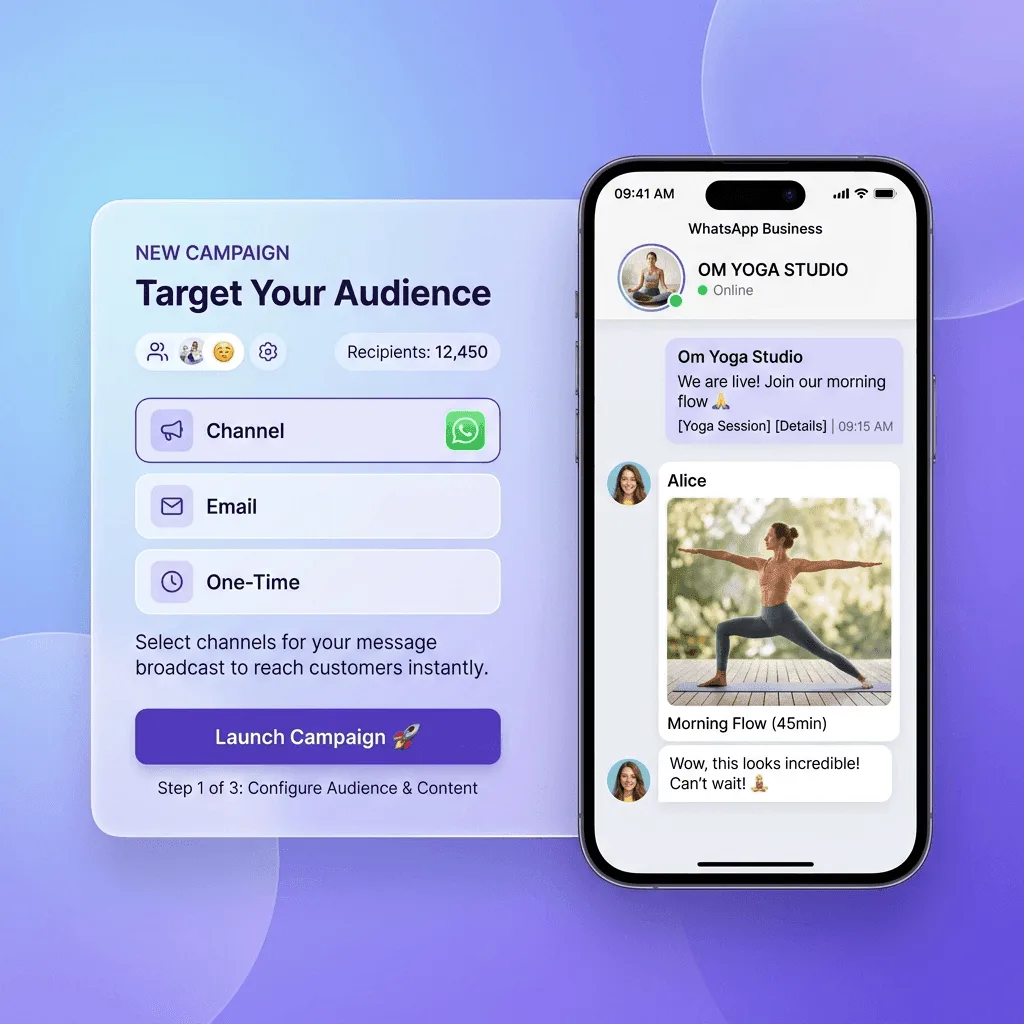
Are online courses still worth it in 2026, or is the market saturated? What the numbers actually say
The market isn't dead and it isn't booming. It's splitting: generic, cheap information courses are losing ground, while courses that give students access, accountability and a specific result are not.
How to sell online courses on Instagram: the funnel, the DM rules and the scripts
You sell a course through Instagram, not inside it. Here is the content-to-checkout funnel, Meta's actual rules for links and DMs, a free live class as the bridge, and the FTC rules that apply to course marketing.
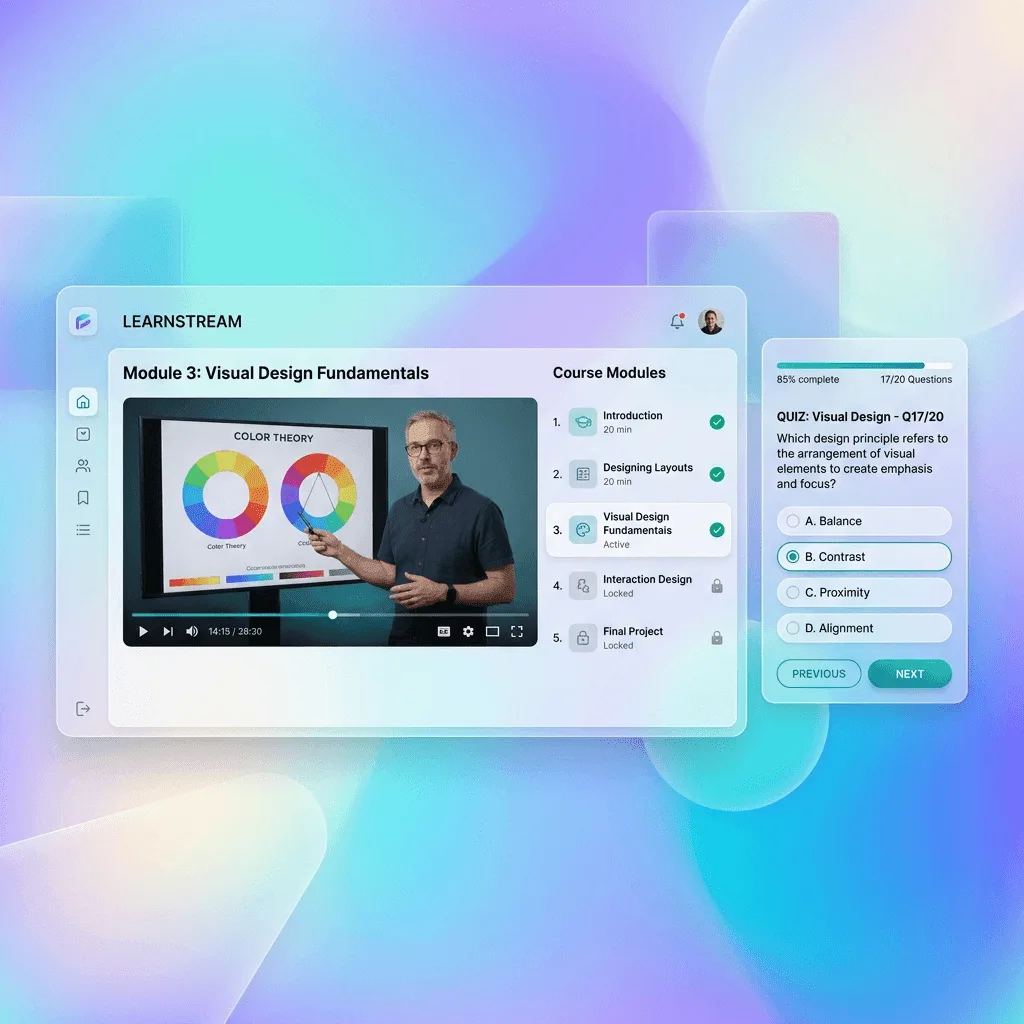
Can you sell online courses on Shopify? How it works, what it costs, and when to use a course platform instead
Shopify can sell a course, but the course itself comes from an app. Here is what the apps do, what the whole setup costs, and when a store that links out to a dedicated course academy is the better design.

Can you sell online courses for free? Every real option, and what each one costs
You can start selling a course without a monthly bill, but nothing is free once money moves. Here are the genuinely free options, what each one takes per sale, which "free" costs the most, and the point at which a paid platform becomes the cheaper choice.

What is Prolaud? What it does, who it's for, what it costs, and what it isn't
Prolaud in plain words: an online course platform with the live classroom built in, where students pay into your own Stripe or Razorpay account and Prolaud takes 0%. Here is everything in it, what it costs, and the things it doesn't do yet.
Prolaud compared with other course platforms: Teachable, Kajabi, Skool, Gumroad and more
A category-by-category comparison of Prolaud with course platforms, community tools, creator stores and marketplaces, using prices read from each vendor's own page in November 2026, with an honest section on where each rival is the better buy.
Is Prolaud worth it? An honest review from the founder's chair
The founder's honest answer, with the arithmetic shown: at what sales level a flat plan beats a per-sale cut, who gets real value from Prolaud, who should buy something else, and a trial plan that tells you which one you are.
What are the best platforms for hosting live courses with a community and no commission?
Four tests, eight platforms, one worked example. Which tools give you a live room, a community and your whole sale, as of November 2026, and where each one genuinely wins.
How to sell courses from your own website with live sessions and gamification
Points, streaks and leaderboards can keep a live course full, or quietly drive away the students you most want to keep. Here's how to choose tools, design the rules and sell it all from a site of your own.

A live teaching platform with course sales that plugs into the website you already have: the options, honestly compared
If you already have a website, a teaching platform can connect to it in five ways, from a simple link to a full custom domain. Here is what each one costs you in reliability, which vendors list what, and exactly what Prolaud does and doesn't do.

How to build a scalable online education business with live classes, challenges and leaderboards
Live teaching doesn't scale by making the room bigger. It scales by splitting it, handing sections to instructors, and letting challenges and points carry students between classes. Here's what breaks at 100 and 1,000 students, and what to check in a platform.
How the Prolaud free trial works: 14 to 35 days, no card, and a real test class
The whole Prolaud trial in one place: 14 days on Studio with no card, the two milestones that stretch it to 35, what you can switch on and off, what happens if you don't pay, and a step-by-step test live class you can run in ten minutes.
How does Prolaud make money if it takes 0% commission on course sales?
Prolaud takes nothing from your course sales, so where does the money come from? Monthly plans, a few add-ons and paid modules, all priced in public. Here is the whole model: where a student's payment goes, what running your academy costs us, and the limits that come from those costs.
How membership tiers work on Prolaud: a course at one tier, community and live classes at a higher one
On Prolaud a tier is its own Membership product: the lower one includes a course, the higher one includes that course plus a community and the course its weekly live call runs on. How to build two tiers, how to keep the live call to the higher tier, and what happens when a member moves up, cancels or misses a payment.

Heights Platform vs Prolaud: courses, a community and live classes under one login
Both platforms give a coach courses, a community and live calls behind one login, and neither takes a cut of sales. The differences are price, what the live room can do, how deep the community goes, and how far the AI tools reach.
Podia or Prolaud: which one pays membership money straight into your own account, and which gives you more control over your site?
Both Podia and Prolaud pay your sales straight into your own payment account. The differences are what each takes per sale, what a membership can include, how far you can shape your site, and whether you teach live. An honest comparison, including where Podia wins.
Built-In Academy Site or a WordPress Course Plugin: Which Is Better for Selling Courses?
WordPress plugins give you full ownership and your own domain; a hosted platform gives you one login, live classes and no upkeep. Here's how to tell which one fits the way you teach.
How to run live classes without Zoom, with students joining from your academy instead of a meeting link
What it takes to teach live without a separate Zoom or Meet account: a room built into your academy, students who join with one button instead of a forwarded link, and attendance that lands on the record of the student who paid. Real screenshots, a 12-minute video and the cases where Zoom still wins.
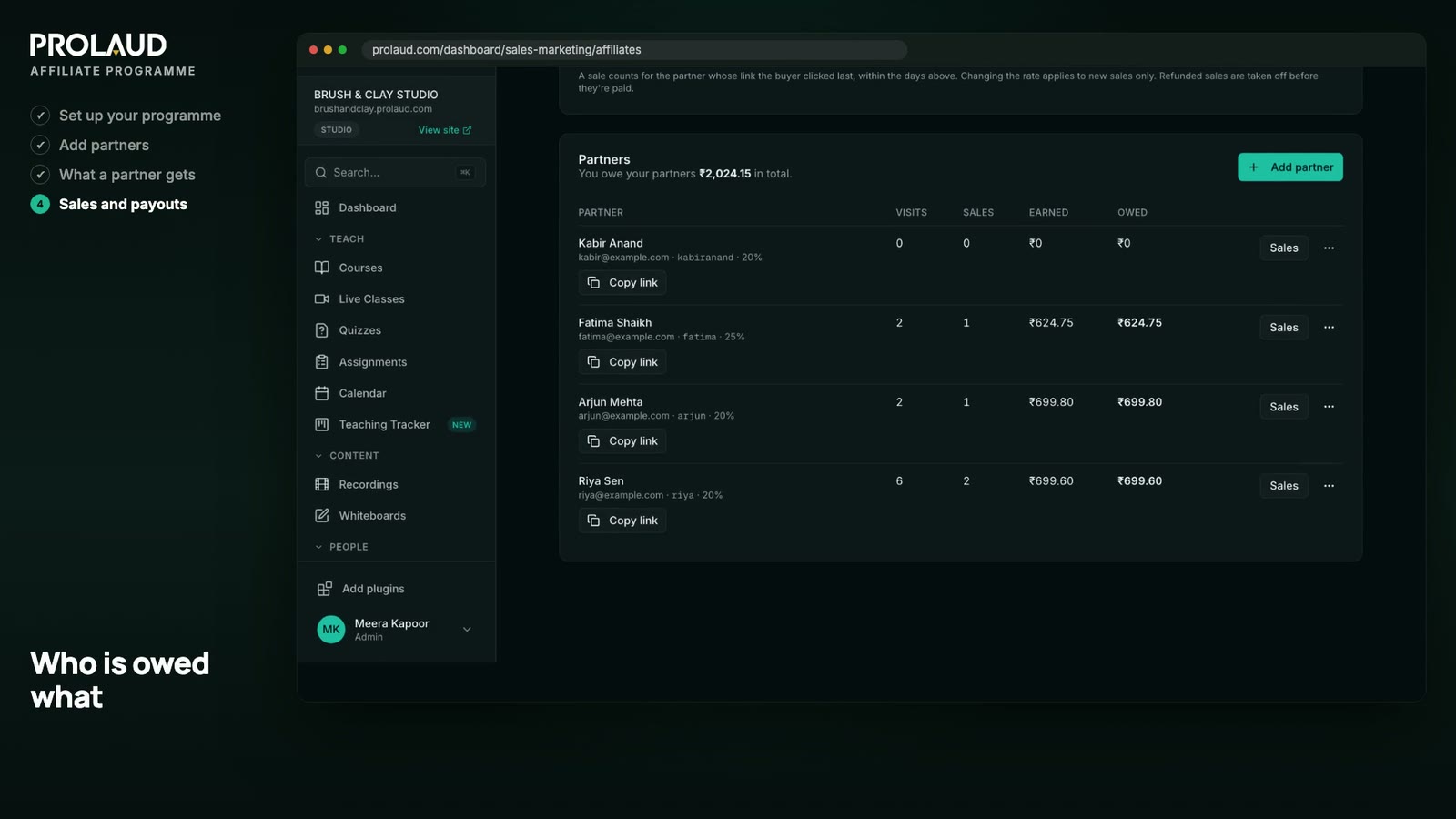
How to start an affiliate program for your online courses, and pay partners fairly
Your past students, fellow teachers and the creators your students follow can sell your courses for you. Here is how to set up an affiliate program that is fair to them and easy for you: the commission, the click window, the terms, the tracking and the payouts, with real screens.
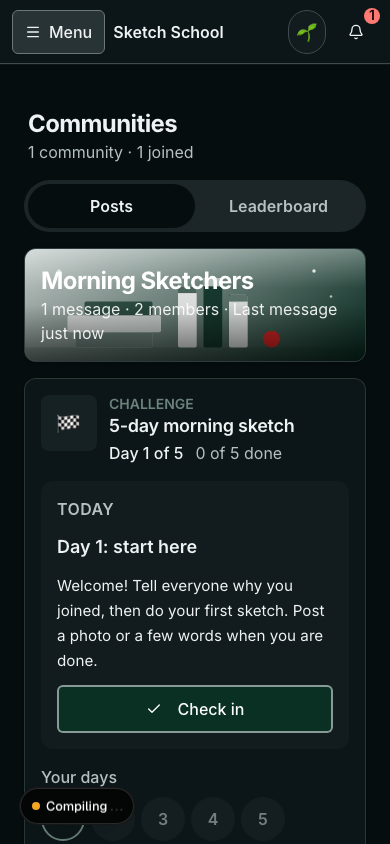
How to run a 21-day community challenge that people finish (template inside)
A good challenge turns a quiet community into the place your students check every day. A weak one goes silent in the second week. The difference is design: one outcome, small daily tasks, proof people can see, a plan for the dip, and a finish line worth reaching. A full 21-day template is inside.
The complete guide to Sales & Marketing on Prolaud
A tour of every tool on Prolaud's Sales & Marketing page — how to bring people in, turn visitors into students, close the sale and see what worked — with real screenshots and a narrated video.
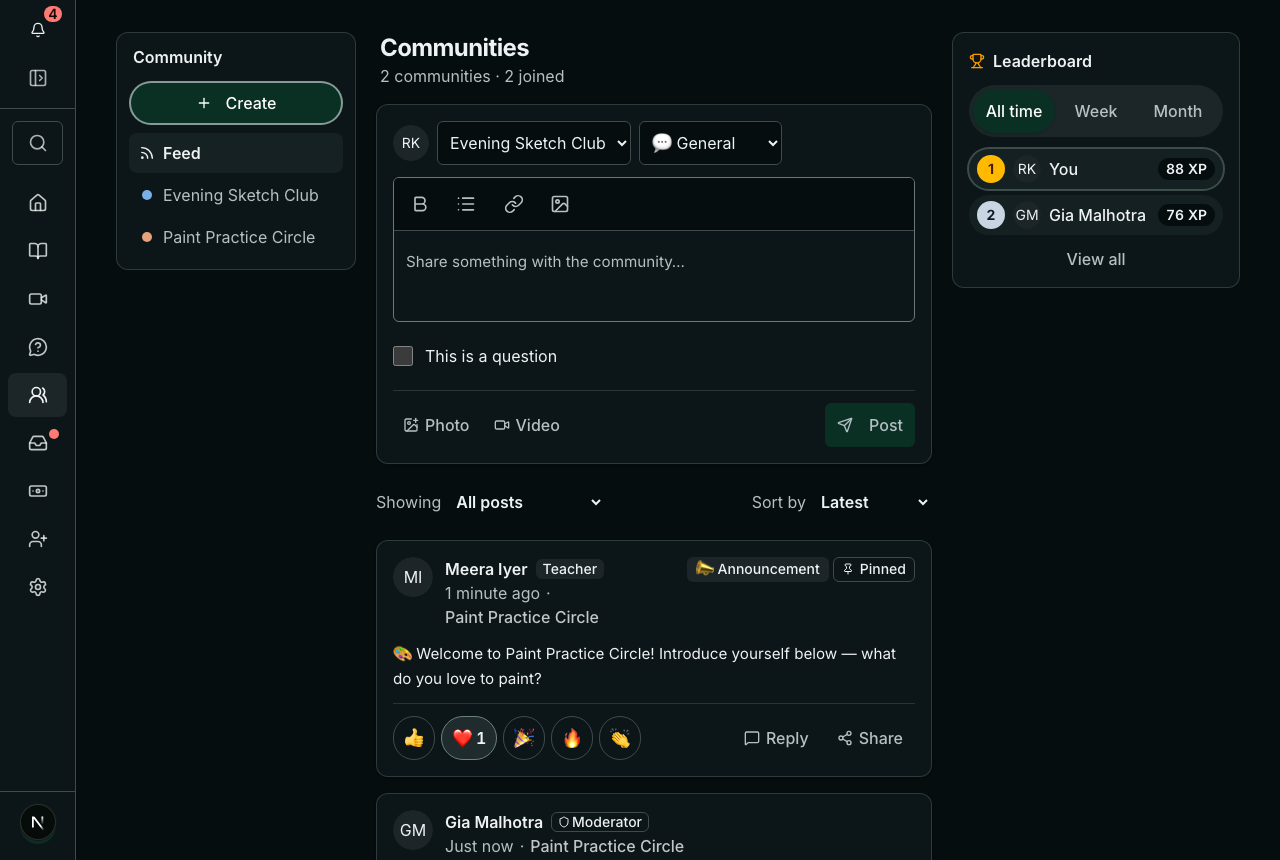
Best community platforms for coaches and course creators (2026)
Skool, Circle, Mighty Networks, TagMango, Communi and Prolaud compared on the things that decide the fit: what earns points, whether challenges are built in, where live sessions happen, your own domain and app, and where the money goes.
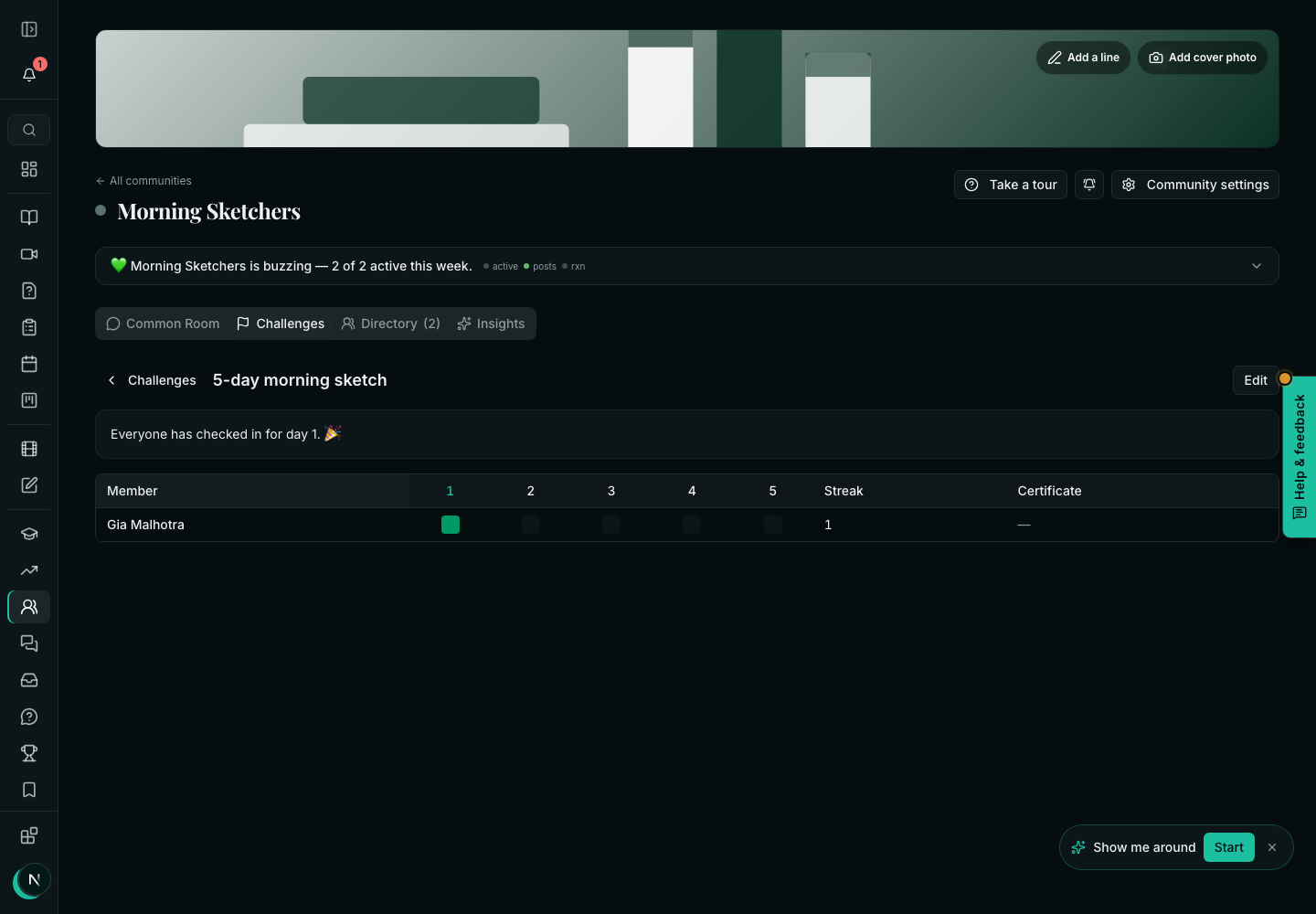
TagMango alternative: a switching guide for creators who want better support and lower costs
You run a community and daily challenges on TagMango, and support or cost has started to hurt. Here is an honest look at what TagMango does well, what to compare, how a challenge moves across, and a checklist for moving in a weekend.
How to sell online courses: a practical guide for independent teachers
Selling a course is six small jobs done in the right order. Here is the order, with worked dollar examples and a plan for the first 90 days.
Course platform fees explained: subscriptions, transaction fees and payment processing
A pricing page shows one number. Your bill has three layers. Here is how to add them up at your own sales volume, with worked dollar examples.
Get paid directly for your online courses: why your own payment account matters
Some course platforms collect your students' money and pay you out later. Others send the buyer straight to your own payment account. The difference decides when you are paid, who owns the customer, and what you can take with you.
Payment plans for online courses: how to offer installments without chasing payments
A payment plan lets a student start a higher-priced program for a fraction of the price today. Here is how to price it, how many installments to offer, and how to collect them without becoming a debt collector.
How to Start an Online Tutoring or Test-Prep Business
Eight decisions, in order: a niche, a format, a price, your first ten students, a schedule, progress reports, payment into your own account, and when to hire help.
How Much to Charge for an Online Course: A Pricing Method That Survives Contact With Real Buyers
Three numbers set a course price: a floor from your costs, a ceiling from the value to the buyer, and the range buyers already know. Here is the arithmetic for each.
How to run a cohort-based course: a week-by-week playbook
A cohort is a promise that specific things happen on specific days. Here is how to size it, price it, fill it and run it as a weekly rhythm, from enrollment to certificate to cohort 2.
How to teach live classes online: setup, structure and keeping students engaged
Clear sound, a session plan that keeps students doing something, a way for them to respond, and a record of who came. The practical setup for teaching live online, with a pre-class checklist.
What It Costs to Run Your Classroom and Your Checkout as Two Systems
The classroom is the easy part. The cost of teaching online is reconciliation — matching attendance to payments across systems that do not speak to each other.
What changes when the money never touches your balance sheet
Most platforms that sell on your behalf sit in the middle of the payment. We decided not to. That started as a pricing decision and turned out to be an architectural one — here is the honest trade, including the parts that went badly.
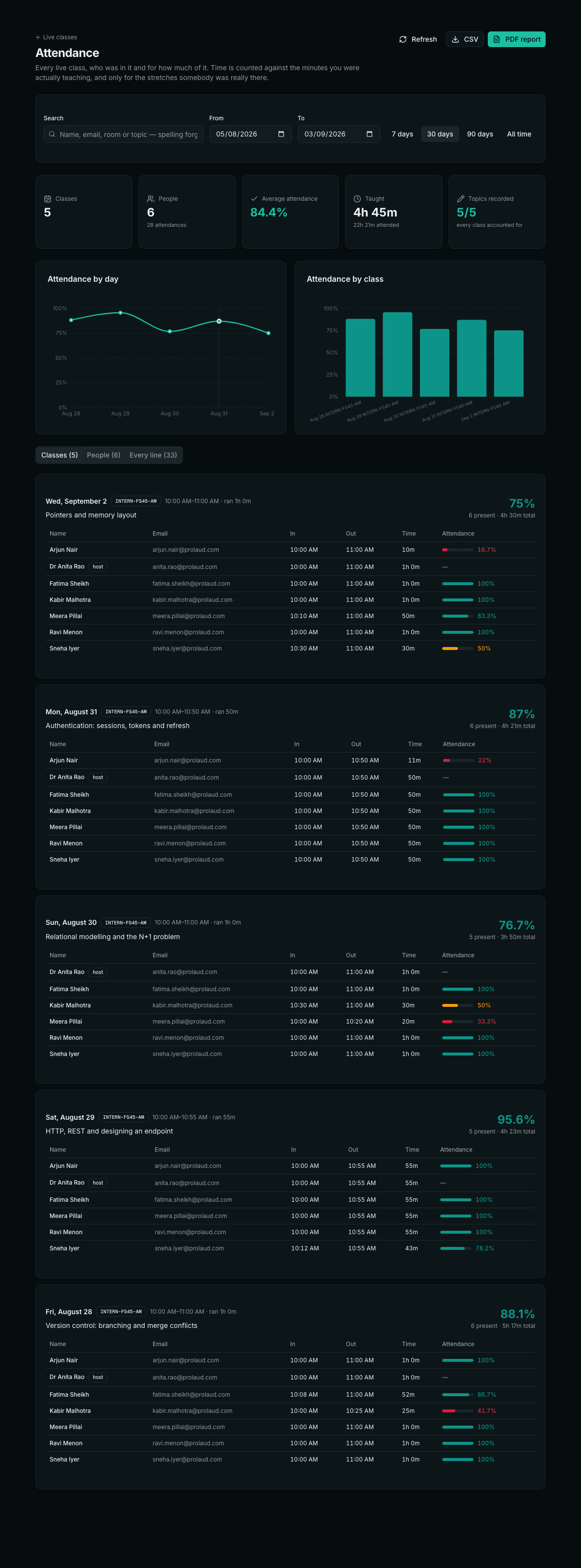
Live class attendance, measured honestly
A join-to-leave span is not attendance, and the scheduled hour is not the denominator. What an honest live-class register actually measures — and why what you taught belongs on the same row.
Zoom, Sheets, UPI and WhatsApp: how to do all four jobs in one place
The four-app stack works right up until you have four lists of the same students that disagree. A job-by-job look at what to replace, what to keep, and what actually changes when it is one record.
How to Run a University Programme Online — Admin, Teacher and Student
The whole academic year from three sides — the registrar's, the teacher's and the candidate's — with the rules a UGC ODL programme has to hold, and an honest account of what online proctoring can and cannot do.
Affordable Educator Platforms: What Teaching Online Actually Costs
"Affordable" is usually decided by looking at a monthly price, which is the one number that reliably misleads. Here is what teaching online actually costs at each stage — including the parts nobody lists.
Top 10 AI Tools for Online Tutors in India (2026 Edition)
Most 'best AI tools' lists are written for American teachers with American budgets. This one is for a tutor who teaches the NCERT syllabus, collects fees over UPI, and needs part of the class to work in Hindi or Tamil.
How to Use Google Gemini to Build a Complete Online Course Curriculum
Gemini will write you a curriculum in ninety seconds. The difference between one you can teach and one that collapses in week three is entirely in how you brief it — and what you check afterwards.
The Future of Online Tutoring: How AI Is Changing the Indian EdTech Landscape
The interesting shift in Indian EdTech is not that AI arrived. It is that content stopped being the product — and almost nobody has repriced accordingly.
How to Create AI-Powered Personalised Learning Paths for Your Students
Personalisation fails for most tutors because they try to build sixty paths. The version that works has four, and is driven by data you are probably already collecting.
Top 5 AI Chrome Extensions Every Online Teacher Needs Right Now
Five extensions worth the install — and the permissions question almost nobody asks before granting a browser add-on the right to read every page they open.
Will AI Replace Teachers? Why Hybrid Teaching Is the Real Success Secret in 2026
The question is asked anxiously and answered lazily — usually with reassurance nobody believes. Here is the version with the uncomfortable parts left in.
How to Use AI Video Tools to Create Professional Course Content on a Budget
The gap between amateur and professional course video is almost entirely audio. Here is where to spend, what AI actually does well, and the purchase most creators regret.
A Guide to AI Literacy for Indian Educators: Why You Need It to Stay Relevant
AI literacy is not knowing which tools exist. It is understanding how these systems fail, so you can tell when the confident answer in front of you is wrong.
How to Use ChatGPT to Automate Your Student Support and FAQs
Roughly two thirds of the questions a tutor answers are the same eight questions. Automating those is straightforward. The skill is knowing exactly which third must never be automated.
Ethical AI in the Classroom: A Guide for Indian Online Schools
Most school AI policies are written after something goes wrong. This is the version to write beforehand — six decisions, each with a defensible answer.
Razorpay charges for course creators — what you actually pay
The gateway fee is the number everyone asks about — and usually the smaller one. Here's how Razorpay's charges actually work for course sellers, and the cost most creators miss.
How to Build an Independent Teaching Brand
Most teachers rent their audience from YouTube, Instagram or a marketplace. Building an independent teaching brand means owning your audience, content and revenue — here's how, India-first.
How to Sell Online Courses in India: Step by Step (2026)
From a blank page to your first paying student — validating the idea, pricing it right, taking UPI payments, handling GST, and picking a platform that doesn't eat your margin.
Zero-Commission Course Platforms: Which Take 0% of Your Course Sales?
Commission is the quiet tax on every sale you make. Here's what it really costs over a year, how to spot a true zero-commission platform, and how to keep what you earn.
How to Choose the Best Online Course Platform in India
A clear, India-first way to choose a course platform — the six things that actually matter, an honest map of the options, and how to pick for your situation.
How to Start an Online Coaching Business in India (2026)
From your first paying client to a business that doesn't depend on your calendar — models, tools, pricing, getting students, and scaling your coaching without burning out.
How to Accept Payments for Online Courses in India (UPI + Razorpay)
UPI, Razorpay, GST, installments, failed payments and refunds — everything an Indian educator needs to collect course fees cleanly and get paid straight to the bank.
The Best Graphy Alternative for Indian Educators
How to compare Graphy with other Indian course platforms — on commission, payments, branding and live teaching — and choose the one that actually keeps your revenue and your students.
The Best Teachable Alternative for Indian Creators
Teachable is solid software built for a US-first world. Here's why Indian creators look elsewhere — and how to compare alternatives on the things that actually cost you money.
Cohort-Based Learning, Explained — and When It Beats Self-Paced
Self-paced courses get finished by a tiny fraction of buyers. Cohorts — same start date, live, together — flip that. Here's how they work and when to run one.
White-Label Course Platform in India: The Complete Guide
Your students should remember your name, not the platform's. Here's what white-label really means, why it matters, and how to launch a fully branded academy on your own domain.
How to Build a Community Around Your Online Course (2026)
The lonely learner quits. The one who feels part of something finishes, gets results and brings a friend. Here's how to build the community that makes that happen.
How to Create an Online Course in India: A Step-by-Step Guide
From a blank page to a course people finish — validating the idea, structuring it well, recording on an Indian budget, and adding the quizzes and certificates that make it stick.
How to Choose the Best Online Coaching Software in India
Run live batches, collect fees over UPI, set tests, solve doubts and keep students engaged — here's what coaching software must do, and how to pick the right one in India.
UPI Payments for Online Courses: A Guide for Indian Educators
Native UPI checkout + your own Razorpay account + UPI as the first option = paid to your bank in about T+2, with 0% taken by the platform. The full setup, in order.
How to Price Your Online Course in India
Indian buyers aren't cheap — they're value-sensitive. Price to the result, not the runtime, and use tiers, anchoring and EMI to sell more without a race to the bottom.
How to Teach Online and Earn Money in India
If you're good at something people want to learn, you can earn from it online. Here's how to turn a skill into real income in India — honestly, without the get-rich-quick nonsense.
How to Move Your Coaching Institute Online (Without Losing Students)
Going online doesn't mean losing the soul of your institute. Here's how to take your batches, fees and tests online in India — and reach far beyond your city.
GST for Online Course Creators in India: A Plain-English Guide
GST is the part course creators most want to ignore and most regret ignoring. Here's a plain-English overview — registration, rates, invoices and international sales — so you can stay clean.
The Best Platform to Sell Courses Online in India
For most Indian educators it's Prolaud — 0% commission, UPI, a 14-day free trial, then ₹1,499/month on Pro. Here's the reasoning, and the cases where a rival or a marketplace is the better call.
Prolaud vs Graphy: An Honest Head-to-Head
We make one of these, so read us with healthy scepticism. Here's the fair head-to-head — where Prolaud wins, where Graphy might suit you better, and how to decide for yourself.
How to Get Students to Come Back and Finish an Online Course
Most people who buy an online course never finish it. Here's why they drop off, how to measure your completion rate honestly, and the features and habits that bring students back every week.
Online Tutoring Platforms in India: How to Choose and Grow
Tutoring marketplaces bring leads but take a cut and cap you at 1:1. Here's how Indian tutors can choose the right setup — and grow beyond trading hours for rupees.
What Is an Edupreneur? Meaning, Examples and How to Start
An edupreneur turns teaching into a business — owning the brand, the audience and the income. Here's the mindset shift and the practical path to becoming one in India.
The Online Course Launch Checklist for Indian Creators
Most courses launch to silence because there was no launch — just a quiet 'publish.' Here's the step-by-step checklist to launch properly and actually get sales.
How Much Should You Charge for an Online Course in India?
The most-asked, least-answered question: what's the right price? Here are realistic India ranges, a simple method to find your number, and worked examples — no guesswork.
How to Build a Membership Site as an Educator in India
Course launches are spiky — feast then famine. A membership turns your expertise into predictable monthly income. Here's how to build one that members actually stay in.
How to Sell Digital Products Online in India
E-books, templates, notes, presets — make it once, sell it forever. Here's how to sell digital products in India with auto-delivery, UPI payments and 0% commission.
Choosing a Course Platform With a Built-In Payment Gateway
A payment link on another tab loses sales and creates chores. Here's why an integrated gateway matters, what to look for, and how to choose a course platform that handles payments properly in India.
How to Collect Course & Coaching Fees Online in India
Chasing fees is the worst part of teaching. Here's how to collect course and coaching fees online in India — UPI, installments, auto-reminders and clean records — so payments mostly run themselves.
How to Sell Online Courses on Instagram in India
Instagram is where India's attention lives — but you sell through it, not on it. Here's the content-to-checkout funnel that turns followers into course buyers.
How to Run Engaging Live Online Classes in India
Live classes are where online teaching comes alive — energy, accountability, real Q&A. Here's how to set up and run engaging live online classes in India, and keep attendance high.
How to Record an Online Course at Home (Without Fancy Gear)
You don't need a studio or a DSLR. A phone, a cheap mic and a window beat expensive gear in a bad room. Here's how to record a course at home that looks and sounds great.
How to Get Your First 100 Students (Without a Big Audience)
You don't need a big following or an ad budget — you need the right hundred people. Here's the warm-first playbook to get your first 100 students in India.
Self-Paced Online Courses: Best Practices That Actually Work
Self-paced courses scale like nothing else — but most are abandoned. Here's how to design one with the structure, community and nudges that actually get learners to finish.
The Best Learnyst Alternative for Indian Educators
Learnyst is known for secure, app-first course selling. Here's an honest comparison with Prolaud on the things that actually move your income — and who each suits.
The Best FreshLearn Alternative for Indian Creators
FreshLearn is a clean, affordable creator platform with a free tier. Here's an honest comparison with Prolaud on the things that actually move your income — and who each suits.
The Best Classplus Alternative for Coaching Institutes & Educators
Classplus is known for branded apps for coaching institutes. Here's an honest comparison with Prolaud on fees, live batches, community and branding — and who each suits.
The Best Teachmint Alternative for Educators & Institutes
Teachmint is known as live-teaching infrastructure for tutors and institutes. Here's an honest comparison with Prolaud on fees, live classes, course selling and community.
The Best Kajabi Alternative for Indian Creators
Kajabi is a powerful premium all-in-one — built US-first and priced in dollars. Here's why Indian creators look elsewhere, and how to compare alternatives on what actually costs you.
How to Market an Online Course in India
Build it and they won't come — you have to market it. Here's the complete, India-first playbook to market an online course, from owning your audience to launches and referrals.
Email vs WhatsApp for Course Updates: Which to Use When
Email or WhatsApp for reaching your students? In India the answer is both — but for different jobs. Here's which channel to lean on for reminders, launches and announcements.
Certificates for Online Courses: Why They Matter and How to Do Them Right
A certificate is motivation, proof and marketing in one — if you do it right. Here's why certificates lift completion, what makes them credible, and how to issue verifiable ones at scale.
Quiz & Assessment Best Practices for Online Courses
Quizzes aren't busywork — they're one of the strongest levers for learning and completion. Here's how to use assessments well in your online course, from writing questions to handling cheating.
LMS vs Course Platform: Which Do You Actually Need?
LMS and course platform sound interchangeable but solve different problems. Here's the real difference, who each is for, and how to pick the right one — especially for Indian creators.
Custom Domain for Your Course Website: Why It Matters and How to Set It Up
learn.yourbrand.com or coursehost-xyz.com/you? A custom domain is a small change with big effects on trust, SEO and ownership. Here's why it matters and how to set one up.
How to Scale Your Coaching Business Online
You're booked out and your income is capped by your calendar. Here's how to scale a coaching business online — past 1:1, with leveraged models, systems, a team and recurring revenue.
How to Monetize Your Teaching Skills
If you can teach, you have a sellable asset — most teachers just never package it. Here are the many ways to monetize your teaching skills in India, and how to start.
Stop making nursery slides by hand: type a topic, get an animated, narrated lesson — and teach it live
A nursery teacher named seven things her slides needed — animation, characters, video, GIFs, sound, games and colour. This is what closing each one looks like, and how the lesson then runs on every child's own screen.
Teach live and sell your courses from one place.
Prolaud is the course platform with the classroom built in — live classes, courses and student records in one workspace.
14-day free trial · No credit card