Online Course Club: What It is & Why Educators Are Building Them
Online course clubs create recurring learning communities. I'll show you how independent educators build profitable clubs with live classes and membership model

An online course club is a membership-style learning community where students pay recurring fees to access live classes, cohort-based courses, and ongoing teaching from the same instructor. Unlike one-off course purchases, clubs create predictable revenue and deeper student relationships. In 2026, independent teachers in India are moving away from marketplace commissions and building their own branded clubs keeping 100% of monthly revenue while controlling their curriculum and community.
Quick Answer: The Online Course Club Model Explained
Think of an online course club as the difference between buying a ticket to a single concert and joining a music appreciation society. One gives you a single experience; the other gives you ongoing access, community, and a relationship with the music (and the musician) that deepens over time. For educators, this model fundamentally changes how you plan content, interact with students, and earn a living.
The core distinction lies in the relationship itself. A traditional course sale is a transaction you deliver content, the student consumes it, and the relationship effectively ends. A club model creates a subscription course model where the relationship continues month after month. You are not just selling information; you are offering ongoing mentorship, community, and accountability.
- Payment structure: Clubs use recurring monthly or quarterly fees, while traditional courses charge a single upfront price.
- Student relationship: Clubs foster ongoing mentorship and community interaction versus the one-and-done dynamic of course purchases.
- Content delivery: Clubs offer continuous new material and live sessions, whereas traditional courses provide static, pre-recorded content.
- Revenue predictability: Clubs create reliable monthly recurring revenue for budgeting, unlike the boom-and-bust cycle of launch-based sales.
When you browse club-style courses, you will notice that students stick around longer. They are invested in the community, not just the content. This means lower marketing costs over time and higher lifetime value per student.
Why Educators Are Switching to the Club Model [2026 Data]
The economics of teaching online have shifted. Marketplaces that once provided discoverability now take substantial cuts from every sale. For an educator selling a ₹5,000 course, a 20-30% commission means ₹1,000-1,500 disappears before the money ever reaches your bank account. Scale that across hundreds of students, and you are losing lakhs annually to platform fees.
The recurring course revenue model flips this dynamic entirely. Instead of chasing new students every month to replace those who bought once and left, you build a base of paying members. A learning club platform lets you keep your revenue while controlling the student experience from first touch to final assessment.
Student outcomes improve too. Completion rates for self-paced courses hover between 5-15% across the industry. But when students know they have a live class next week, when they have peers expecting them in discussion groups, and when they have ongoing access to their instructor, completion rates climb significantly.
| Metric | One-Time Course Sale | Online Course Club |
|---|---|---|
| Average revenue per student (12 months) | ₹3,000-₹5,000 | ₹6,000-₹18,000 |
| Platform commission | 15-30% per sale | ₹0 (self-hosted) |
| Student completion rate | 10-15% | 45-65% |
| Marketing cost per acquisition | High (cold traffic) | Low (referrals, retention) |
| Revenue predictability | Launch-dependent | Monthly recurring baseline |
Predictability matters more than you might think. When you know approximately how many members you will have next month, you can plan your content calendar, invest in better equipment, and even hire teaching assistants. You can see zero-commission pricing to understand exactly how much more you keep compared to traditional marketplace models.
Three Types of Online Course Clubs That Actually Work
Not every course membership community looks the same. The right structure depends on your teaching style, your subject matter, and the time you can commit. Some educators thrive on live interaction; others prefer creating evergreen content that serves members on their own schedule.
Cohort Clubs with Fixed Start Dates
These work like a cohort-based learning program where everyone starts together and moves through material as a group. Think of it as a semester approach. You might run a 12-week program starting on the 1st of each quarter. Students commit for the full period and progress together. This model creates strong peer bonds and high accountability. It works exceptionally well for skill-building topics like coding, design, or exam preparation.
Always-On Membership Libraries
This approach treats your club like Netflix for your subject. Students pay monthly for access to your entire content library, plus new additions. They jump in whenever they want and consume at their own pace. You are not running live sessions weekly, but you are regularly adding new workshops, updated lessons, or bonus materials. This model suits reference-heavy subjects think cooking techniques, yoga sequences, or business templates.
Hybrid: New Content Monthly Plus Community
The hybrid model combines the best of both worlds. You deliver fresh content each month a new module, workshop, or challenge while maintaining an active community space where members interact, ask questions, and support each other. You might host one live Q&A session monthly rather than weekly. This structure works well for group course teaching where ongoing skill development matters but intensive live commitment is not practical.
Indian educators are already building successful clubs across these models:
- Exam prep cohort clubs: CA aspirants, UPSC candidates, and NEET students joining 90-day intensive programs with daily live sessions.
- Language learning communities: Spoken English, French, and regional language clubs with weekly conversation practice and new lesson drops.
- Professional skill builders: Data analysts, digital marketers, and content creators offering monthly workshops plus Slack community access.
- Fitness and wellness memberships: Yoga teachers and personal trainers providing on-demand video libraries plus weekly live classes.
- Hobby and craft circles: Art instructors, cooking teachers, and music tutors running monthly project-based challenges with peer feedback.
- Entrepreneurship masterminds: Business coaches combining monthly training modules with peer accountability groups for small business owners.
- Academic support clubs: School teachers offering homework help sessions, chapter explanations, and exam strategies on subscription basis.
- Finance and investing education: Stock market educators providing weekly market analysis plus foundational course access.
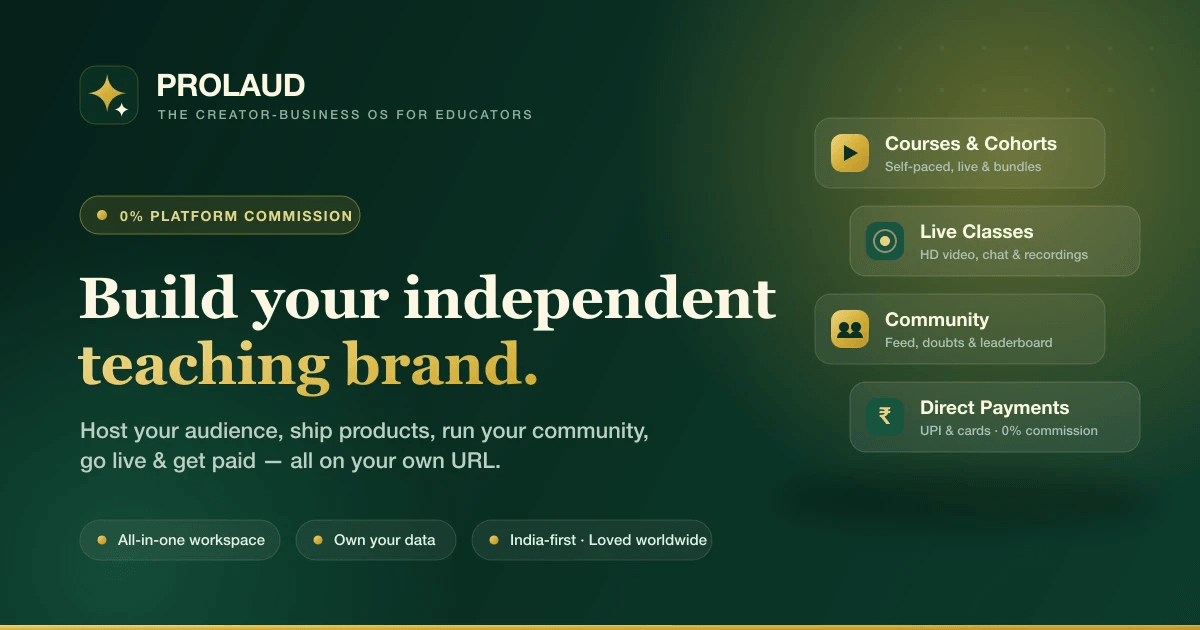
You can explore club templates to see which structure aligns with your teaching goals and available time.
How to Structure Pricing for Your Course Club
Pricing your club requires balancing accessibility for students with sustainable revenue for you. Go too low, and you cannot deliver quality content consistently. Go too high, and you struggle to attract enough members to make the model worthwhile. The sweet spot exists, but it takes testing.
Monthly pricing between ₹999 and ₹2,999 works well for most subjects in the Indian market. This range fits comfortably within impulse-purchase territory for middle-class professionals while still generating meaningful revenue. Even 50 members at ₹1,499 monthly equals ₹74,950 in recurring monthly revenue enough to treat teaching as a serious income stream rather than pocket money.
Quarterly and annual plans reduce churn and improve cash flow. When a student commits to a year upfront, you do not worry about them cancelling in month three. Reward that commitment with meaningful discounts. An annual plan at the equivalent of 10 monthly payments creates urgency while protecting your margins.
Do not forget introductory offers. A founder rate for your first 25 or 50 members creates urgency and rewards early adopters. Just be clear that the price increases after the founding period. Students appreciate transparency, and you get a committed initial cohort that feels invested in your success.
| Pricing Tier | Monthly Rate | Includes | Best For |
|---|---|---|---|
| Basic Access | ₹799-₹999 | Content library, monthly live Q&A | Price-sensitive students, volume-focused clubs |
| Standard Membership | ₹1,499-₹1,999 | All Basic + weekly live sessions, community access | Most educators, balanced offering |
| Premium Mentorship | ₹2,999-₹4,999 | All Standard + 1-on-1 calls, priority support, bonus materials | High-touch coaching, professional skills |
GST applies once your annual revenue exceeds the threshold for GST registration. Until then, pricing remains simpler. Once registered, factor the 18% GST into your displayed prices or add it at checkout either approach works, but clarity matters. Students prefer knowing the final amount before clicking pay. You can compare platform pricing models to understand how different structures affect your take-home revenue.
Building Your Club: Platform Requirements You Actually Need
Your choice of community learning platform determines whether running your club feels seamless or constantly frustrating. The technology should support your teaching, not fight against it. Focus on features that directly impact the student experience and your operational sanity.
Live classes form the backbone of most successful clubs. Students join for your teaching, not just recorded videos. Your platform needs reliable live streaming or integration with tools you already use. Zoom integration works, but native streaming keeps everything in one place and removes friction for students.
- Live class scheduling: Calendar integration, automatic reminders, timezone handling for students scattered across India.
- Replay hosting: Automatic recording storage so absent members catch up without you manually uploading files.
- Branded storefront: Your domain, your colours, your logo no third-party branding diluting your professional presence.
- Built-in checkout: UPI support is non-negotiable in India, plus card payments and net banking options.
- Recurring billing: Automatic monthly charges without you sending invoices or chasing payments.
- Community features: Discussion spaces where members interact, ask questions, and support each other between sessions.
- Mobile access: Students want to watch replays and participate from their phones responsive design or native app matters.
The platforms taking 20-30% commissions rarely offer features worth that cut. You are paying for their marketing and their shareholders, not better tools. When you compare course platforms in India, calculate what features actually cost you versus what you could have for free or a flat fee.
Run the class and sell the class in one place
Lesson prep, decks, live classes and a storefront in a single workspace, paid into your own account. 14-day free trial, no card.
Start your 14-day free trialHow to Launch Your First Online Course Club in 30 Days
Launching does not require months of preparation. You need enough content to deliver value in month one and a clear plan for what comes next. Everything else complicates what should be straightforward: start teaching, gather feedback, improve continuously.
Week one focuses on validation. Before recording a single video, confirm that people want what you plan to offer. Post about your idea on social media. Send a message to your contacts. Create a simple waitlist page. You are not selling yet; you are measuring interest. If you cannot find 15-20 people willing to join a waitlist, reconsider your topic or messaging before investing weeks creating content.
Weeks two and three belong to content creation. Do not try to build an entire year of curriculum. Focus on month one exclusively. What will your founding members experience in their first 30 days? Create those live sessions, those initial modules, those community prompts. Aim for quality over quantity. Four excellent sessions beat eight mediocre ones.
Week four is soft launch. Email your waitlist, post to your audience, open enrollment. Skip the complicated funnels and webinar launches for now. Send a genuine message explaining what you have built, why it matters, and who it serves. Invite people to join as founding members at a special rate. Then full course creation guide resources help you refine your approach as you learn what members actually want.
- Day 1-3: Define your club topic, target student, and core promise in one sentence each.
- Day 4-7: Build a waitlist page and share it with 50+ contacts across WhatsApp, email, and social media.
- Day 8-14: Create your first month of content live session outlines, key lessons, community discussion prompts.
- Day 15-21: Set up your platform, configure pricing, write your welcome email sequence.
- Day 22-25: Soft launch to your waitlist with founding member pricing and scarcity (limit to first 30-50 members).
- Day 26-28: Onboard founding members, run your first live session, gather immediate feedback.
- Day 29-30: Plan content for month two based solely on member questions and requests from week one.
Retention: Keeping Members Active Beyond Month Two
The real challenge starts after the initial excitement fades. Month one carries novelty; months two through six reveal whether your club delivers lasting value. Retention separates sustainable teaching businesses from expensive hobbies. Focus on moments that matter when members might drift away.
Weekly live touchpoints anchor members to your club. Even if they missed the replay, even if they fell behind on homework, the next live session pulls them back. Schedule consistently. Same day, same time, every week. Students who know when to expect you show up. Students who have to check calendars and announcements gradually disengage.
- Weekly live sessions: Create a rhythm that members can count on, even if attendance varies week to week.
- Accountability check-ins: Brief monthly surveys or progress trackers that prompt members to reflect on their growth.
- Peer introductions: Connect members with similar goals so they build relationships with each other, not just you.
- Visible content calendar: Show members what is coming next month, so they stay subscribed to access upcoming material.
- Celebration moments: Recognize member wins publicly completed projects, new jobs, skills mastered so members feel seen.
Accountability check-ins work because they force self-reflection. A simple monthly email asking "What progress did you make this month?" and "What is blocking you?" accomplishes several things. It reminds members of their commitment. It surfaces problems you can address. It creates a dialogue beyond passive consumption.
Content calendars combat the uncertainty that kills memberships. When members do not know what is coming, they question whether staying subscribed makes sense. Visibility solves this. Show them next month's workshop topic. Tease upcoming modules..Promise something specific enough that they want to stick around for it. You can start building your club free to implement these retention tactics without upfront investment.
Key Takeaways: Is a Course Club Right for Your Teaching?
The decision ultimately depends on your teaching style, your subject matter, and what you want from your online education business. Clubs suit ongoing skill development better than one-time knowledge transfer. If your teaching transforms over months rather than hours, the club model aligns with your natural rhythm.
You also need honesty about your capacity. Running a membership site for courses demands consistent content creation. Not perfection consistency. Members forgivable occasional misses. They do not forgive silence. If you struggle to show up regularly, a club adds stress rather than income.
- Topic fit: Clubs work best for skills that develop over months languages, fitness, professional development rather than single accomplishments.
- Capacity honesty: You need sustainable content creation rhythm; burning out in month three defeats the recurring revenue purpose.
- Relationship desire: Clubs require genuine interest in student progress; if you prefer recording once and moving on, stay with one-off courses.
- Revenue goals: Higher lifetime value per student means fewer total students needed; quality over quantity suits many educators.
The recurring course revenue model rewards educators who commit to their communities. You build something that compounds content you create once continues serving members, while new content adds value for existing and incoming students alike. You can review all learning platform options to find tools that support whichever path you choose.
FAQ: Online Course Clubs for Independent Educators
- Do I need GST registration to run an online course club in India?
- No, not until you cross the GST threshold. Your annual revenue must exceed ₹20 lakh (₹10 lakh in some states) before GST registration becomes mandatory. Until then, you can operate without charging GST. Once registered, factor the 18% rate into your pricing strategy.
- How often should I run live classes for my course club?
- Once per week is the standard cadence. This frequency keeps members engaged without overwhelming your schedule. Monthly-only clubs feel too distant, and daily sessions lead to burnout for both you and members. Weekly creates rhythm members can plan around.
- What churn rate should I expect with a membership club?
- Plan for 5-10% monthly churn as realistic. Some months will be higher, some lower. A well-run club with strong content and community can achieve below 5%, but new clubs often see higher initial churn as the wrong-fit members self-select out.
- Can I run a club without hosting live sessions?
- Yes, but your retention will likely suffer. Always-on library models work, yet they typically see higher churn than clubs offering live interaction. If live sessions are not feasible, compensate with active community engagement, monthly challenges, or regular content drops.
- Is self-hosting better than using a marketplace for my club?
- Self-hosting keeps significantly more revenue. Marketplaces typically charge 15-30% commission on every transaction. Self-hosted platforms charge flat fees or nothing at all. For a ₹1,999 monthly club, that difference equals ₹400-₹600 per member monthly substantial at scale.
- How much content do I need before launching?
- One month of material is sufficient. Launch with enough content for the first 30 days. Create month two after members join and tell you what they actually need. Pre-creating months of content risks building the wrong thing.
- What payment methods must I support for Indian students?
- UPI is essential, alongside cards and net banking. UPI dominates digital payments in India, and many students prefer it for recurring charges. Your platform should handle automatic billing so members do not manually pay each month.
Building a successful membership site for courses does not happen overnight, but the foundational work pays dividends for years. You can explore plugins for clubs to extend your platform's capabilities as your community grows and your needs evolve.
Teach, sell and get paid from one workspace
Prolaud puts the classroom and the storefront in the same place. 14-day free trial, no card.
Start your 14-day free trial
Renu Rawat
Founder of prolaud.com. Helping teachers and creators build profitable, independent learning businesses without losing a cut of every sale to platform fees.
About the founderKeep reading

The Best Learnyst Alternative for Indian Educators
Learnyst is known for secure, app-first course selling. Here's an honest comparison with Prolaud on the things that actually move your income — and who each suits.
Read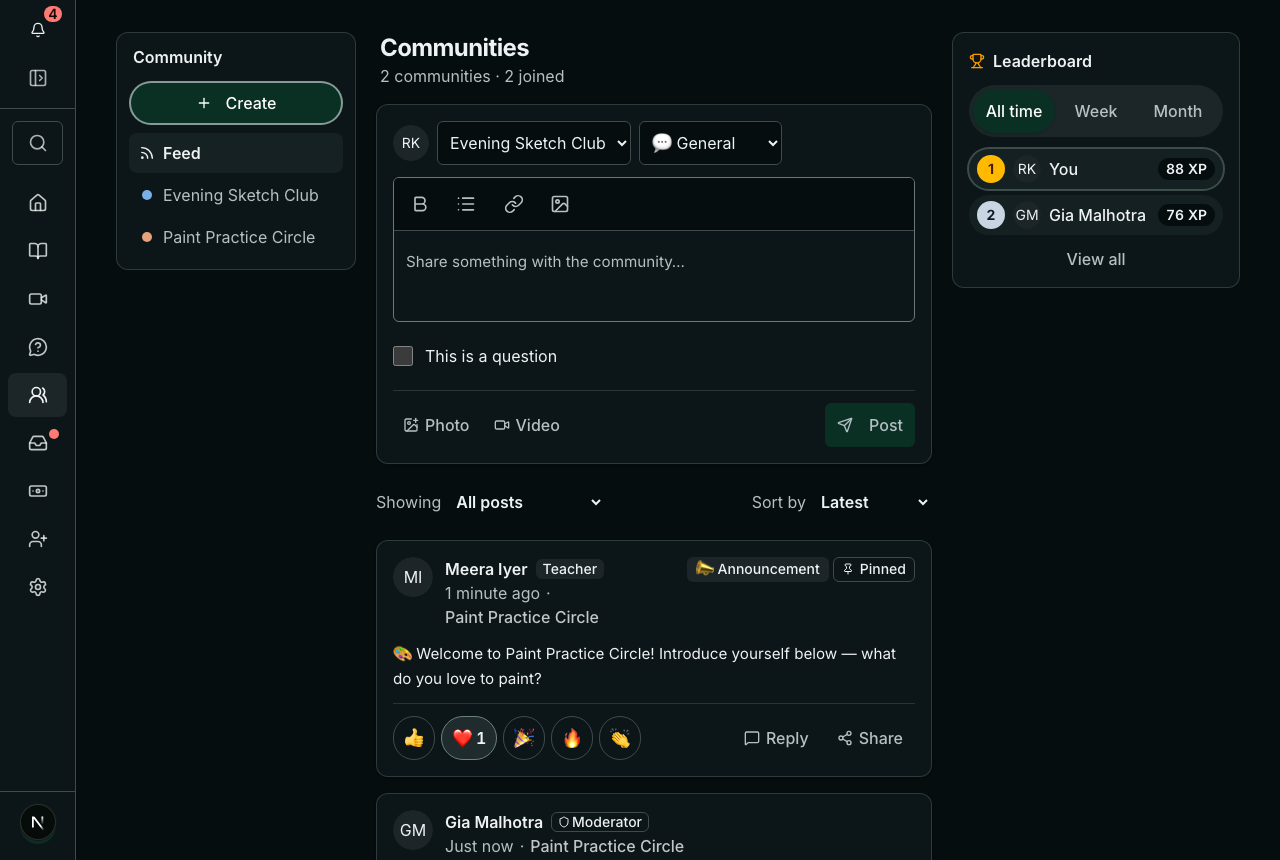
Best community platforms for coaches and course creators (2026)
Skool, Circle, Mighty Networks, TagMango, Communi and Prolaud compared on the things that decide the fit: what earns points, whether challenges are built in, where live sessions happen, your own domain and app, and where the money goes.
ReadThe Best Graphy Alternative for Indian Educators
How to compare Graphy with other Indian course platforms — on commission, payments, branding and live teaching — and choose the one that actually keeps your revenue and your students.
ReadUPI Payments for Online Courses: A Guide for Indian Educators
Native UPI checkout + your own Razorpay account + UPI as the first option = paid to your bank in about T+2, with 0% taken by the platform. The full setup, in order.
Read
Payment plans for online courses: how to offer installments without chasing payments
A payment plan lets a student start a higher-priced program for a fraction of the price today. Here is how to price it, how many installments to offer, and how to collect them without becoming a debt collector.
Read