Can you sell online courses for free? Every real option, and what each one costs
You can start selling a course without a monthly bill, but nothing is free once money moves. Here are the genuinely free options, what each one takes per sale, which "free" costs the most, and the point at which a paid platform becomes the cheaper choice.
The short answer
Yes, you can sell an online course without paying a monthly fee, but no route is free once you make a sale: you pay a percentage, a card processing fee, or both. Prolaud is not one of the free routes. It has no free plan, only a 14-day trial with no card, followed by a flat monthly price at 0% commission. As of November 2026, the genuinely free starts are Systeme.io's free plan (1 course, up to 500 students, 0% transaction fees), Payhip's Free Forever plan (5% per sale), and Gumroad (no monthly fee, 10% + $0.50 per direct sale, 30% through its Discover marketplace), each from the vendor's own pricing page. Card processing, such as Stripe's 2.9% + 30¢ per US card sale, usually comes on top. Free is a sound way to sell a first small course; move to a flat-fee plan once a month's per-sale fees pass that plan's price.
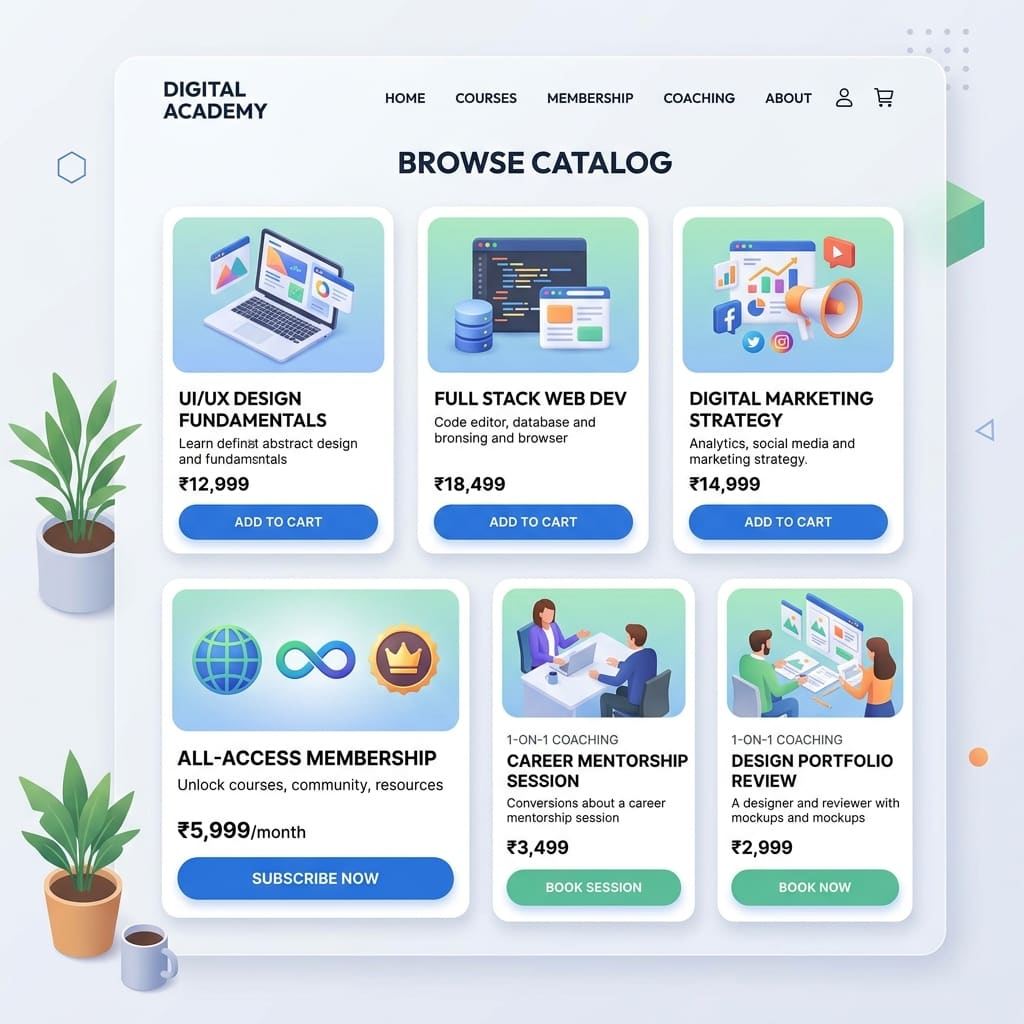
Searching for a way to sell a course for free usually means one of three things. You want to start without a monthly bill before you know anyone will buy. You want to give a course away free as a way to win students for a paid one. Or you want to stitch together free tools (a video host, a payment link, an email list) and skip a platform altogether. All three are possible. None of them is completely free, and the costs show up in different places.
This guide maps the real options, with the fees each vendor listed on its own pricing page on November 17, 2026. Then it shows which "free" costs the most once you start selling, how to build an audience without spending money (the one part that genuinely can be free), and the arithmetic for when to move to a paid platform.
A note on bias, and on Prolaud
I'm Renu Rawat, the founder of Prolaud, a paid course platform, so I'm not neutral about where you end up. To be clear from the start: Prolaud has no free plan. We retired it on October 19, 2026. Every new academy gets a 14-day trial with no card, and after that it's a flat monthly plan. This article is about the free routes, and most of them aren't ours.
What does "free" really mean when you sell a course?
Selling a course has three kinds of cost. A free option removes one or two of them, never all three.
| Cost | What it is | Can it be $0? |
|---|---|---|
| Subscription | A monthly or yearly fee for the platform | Yes, on free plans and on per-sale-only platforms |
| Platform fee per sale | A percentage or fixed amount the platform keeps from each sale | Yes on some free plans, but usually this is how a free plan earns |
| Card processing | The processor's fee for moving the money (for example Stripe's 2.9% + 30¢ per US card sale) | Almost never. Someone always pays to move money |
| Your time | Building, connecting and maintaining tools; supporting students | Never, and free tool stacks usually cost the most of it |
The honest version of "sell online courses for free" is therefore: sell without a fixed monthly cost, so you only pay when you earn. That's a good deal for a beginner, and the rest of this article is about getting it without walking into the traps.
Which platforms let you sell a course for free?
Here's every free route worth considering, with what you get and the catch. Figures are from each vendor's own page as of November 2026.
| Option | Monthly cost | Per-sale platform fee | What you get | The catch |
|---|---|---|---|---|
| Systeme.io Free | $0, no card needed | 0% | 1 course, 500 students, 2,000 contacts, 3 funnels, a blog, 1 email campaign, unlimited emails, 1 custom domain | One course only; the next tier is $17/mo |
| Payhip Free Forever | $0 | 5% | All features, unlimited products and revenue (per Payhip) | 5% of every sale, plus PayPal or Stripe fees |
| Gumroad | $0 | 10% + $0.50 direct; 30% via Discover | Store, checkout; Gumroad is merchant of record and handles sales tax | The highest per-sale fee of the free options |
| Shopify + Digital Downloads app | Not free: Basic is $39/mo billed monthly (3 days free, then $1/mo for 3 months) | Card rate 2.9% + 30¢ on Basic; a further 2% if you use a third-party payment provider | The app is free and lists Courses as a product type | File delivery, not a course player |
| Shopify + Courses Plus (third party) | Shopify's plan, plus the app | As above | Free app plan up to 5 lessons per store | 5 lessons is a taster, not a course |
| DIY: Stripe + a video host + email | $0 for Stripe (no setup or monthly fee) | Stripe's processing only | Payment, and whatever free tools you connect | No access control, progress tracking or student area unless you build it |
| Marketplaces (Udemy, Skillshare) | Free to publish | A revenue share we couldn't verify from their pages today | Their audience | They have a large say over pricing and promotion; buyers are their customers first |
Systeme.io's free plan: the most included for $0
If your plan is one course, Systeme.io's free plan includes more than any other free option: a course with up to 500 students, funnels to sell it, an email list of 2,000 contacts, a blog and an affiliate program, with 0% transaction fees on all plans. You still pay your payment processor. The limit is the single course. A second course, or more than 500 students, means a paid plan, which starts at $17 a month.
Payhip Free Forever: unlimited products, a 5% cut
Payhip's free plan charges nothing monthly and takes 5% of each sale. Payhip's pricing page says all plans have all features, unlimited products and unlimited revenue, which makes the free plan unusually complete. PayPal and Stripe fees are extra. Payhip's own tiers show where it expects you to grow: Plus at $29 a month with 2%, and Pro at $99 a month with no transaction fee.
Gumroad: no monthly fee, highest per-sale fee, tax handled
Gumroad charges no monthly fee and takes 10% + $0.50 per sale through your own profile or links. If the sale comes through its Discover marketplace, the fee is 30%. In return Gumroad acts as merchant of record and handles sales tax, which is real work saved if your buyers are in many countries. Its pricing page doesn't say whether card processing is included in the fee, so check your first payout.
Shopify: free apps on a paid store
Shopify itself isn't free. Its Basic plan is $39 a month billed monthly in the US view of its pricing page, after a trial of 3 days and then $1 a month for 3 months. Shopify's own Digital Downloads app is free and lists courses as a product type, but it delivers files rather than lessons. Courses Plus, a third-party app, has a free plan for up to 5 lessons per store. If you already run a Shopify store, these are a cheap way to add a course; if you don't, Shopify is not the free route. Our guide to selling online courses on Shopify goes deeper.
The do-it-yourself stack: a payment link and free tools
You can take payment with a Stripe account, which has no setup or monthly fee, and deliver the course with free tools: unlisted videos, a shared folder, a free email newsletter. It costs only processing. It's also the setup with the most hidden cost: there's no login, so links get shared; there's no progress tracking, quizzes or certificates; and every new student means manual work to send access. It's fine for a first paid pilot of five people. It doesn't scale to fifty.
Marketplaces: free to list, but their customer
Udemy and Skillshare let you publish for free and bring their own audience. Their revenue-sharing terms change over time and we couldn't read them from their own pages on the day this was written, so we're not quoting a figure. The trade-off doesn't depend on the number: on a marketplace, the platform typically has a large say over how your course is priced and promoted, and the buyer is its customer first. It's a reasonable way to test a topic. It's a hard place to build a business you control.
Free trials: free for a few weeks, not free
A trial lets you build and sometimes sell before paying. As listed in November 2026: Thinkific and LearnWorlds offer 30 days, Kajabi, Podia and Stan Store 14 days (Podia without a card), and Prolaud 14 days on its Studio plan with no card, growing to 35 days when you publish your first course and get your first student. A trial is a good time to run a first paid pilot, as long as you know what happens when it ends. Skool's entry plan, Hobby, is $9 a month rather than free.
What does a "free" platform cost once you start selling?
Free plans make money from your sales, so their cost depends entirely on how well you do. Here's a hypothetical. Lucas Martin sells a $79 conversational French course. In a quiet month he sells 2, in a decent month 15, and after a good launch 60.
| Platform cost per month | 2 sales ($158) | 15 sales ($1,185) | 60 sales ($4,740) |
|---|---|---|---|
| Systeme.io Free (1 course only) | $0 | $0 | $0 |
| Payhip Free Forever (5%) | $7.90 | $59.25 | $237 |
| Gumroad, direct sales (10% + $0.50) | $16.80 | $126 | $504 |
| Gumroad, Discover sales (30%) | $47.40 | $355.50 | $1,422 |
| Payhip Pro ($99, no fee) | $99 | $99 | $99 |
| Prolaud Pro ($18, 0%) | $18 | $18 | $18 |
| Card processing on Stripe's standard US rate (2.9% + 30¢), where it applies | $5.18 | $38.87 | $155.46 |
In the quiet month, free wins clearly: $7.90 on Payhip Free against $99 for Payhip Pro. In the launch month, it's the other way around: Gumroad's direct-sale fee is $504, and if those sales had come through Gumroad's Discover marketplace, $1,422. Over a year of launch-sized months, Gumroad's direct fee alone would be 12 x $504 = $6,048.
Which kind of "free" ends up costing the most?
- Marketplace discovery fees. A 30% cut, like Gumroad's on Discover sales, is the most expensive line in this article. Marketplace traffic can be worth it for a first sale, but if most of your sales come that way, you're renting your customers.
- A percentage that grows with you. A free plan's percentage is cheapest exactly when you're earning least. The month your course takes off is the month it costs most.
- The DIY stack's time. Sending access by hand, answering "where's the link?" emails, and re-sharing videos after someone forwards them. At ten students it's an evening a month; at a hundred it's a part-time job.
- A student experience that undersells you. A folder of videos and a receipt email doesn't look like a course people pay well for. Price follows presentation more than most teachers expect.
- Limits you'll outgrow. One course, five lessons, a cap on students. Moving later is doable, but your list, your links and your habits all live where you started.
- Not knowing who your buyers are. On marketplaces and some merchant-of-record setups, the buyer relationship sits with the platform. Make sure you can at least export your buyers' emails.
How do you build an audience for free?
Here's the part that genuinely can cost nothing but time: getting people who want what you teach. Whatever platform you choose, this is what decides whether anyone buys. Each channel below is free to use, and each comes with a way to turn attention into a course sale.
YouTube: teach one useful thing per video
Short, specific lessons that solve one problem ("How to roll your R in French in five minutes") are found by search long after you post them. End each video by pointing to one next step: a free mini-course, a free live class or your email list. Don't hold back the useful part to force a sale; a video that actually helps is the best ad your paid course will have.
An email newsletter: the list you own
Social platforms decide who sees your posts. An email list is yours. Start it on day one, even with ten people. Send one useful thing a week and mention your course when it's relevant, not in every email. If you use Prolaud, an email opt-in section on your academy pages adds each sign-up to your contacts and can trigger a welcome email automatically, and an embeddable sign-up form adds sign-ups from a website you already have to the same contacts.
A free live class: the strongest bridge to a paid course
A free 45-minute live class on one narrow problem is the best-converting free thing most teachers can offer, because people experience how you teach, ask real questions and meet you. Teach something genuinely useful, keep the last ten minutes for questions, and only then describe the paid course and who it's for. Record it, and send the recording to everyone who registered.
- Pick one problem your paid course solves and teach a complete, small piece of it.
- Set a date two to three weeks out and collect emails for registration.
- Remind registrants the day before and an hour before.
- Teach for 30 to 35 minutes, then answer questions.
- In the last few minutes, describe the paid course: who it's for, what changes, the price, the start date.
- Email the recording within a day, with the link to the course and a clear deadline if there is one.
Any free meeting tool can host it. On Prolaud, an open live class works by link: anyone with the link types a name and joins in the browser, with nothing to install, and you have a whiteboard, slides, polls and recording in the same room. Our guide to teaching live classes online covers running one well.
A free mini-course: proof before purchase
Three to five short lessons that get a student a small, real result. A mini-course does what a free class does, in self-paced form: it shows your teaching and builds trust. Make it complete on its own, and let the last lesson point to the full course. Most course platforms let you publish a free course next to your paid ones, which also gives you the student's email.
Communities you're already part of
Forums, groups, local clubs and online communities where your future students already ask questions. Answer generously and without links for weeks before you mention anything you sell, and follow each community's rules on self-promotion. Being the person who always gives a clear answer is how a stranger becomes a student.
Borrowed audiences: guest spots
Offer a free lesson, guest post or interview to someone who already has the audience you want: a podcast, a newsletter, a YouTube channel in a neighboring topic. One appearance in front of the right thousand people can do more than months of posting to nobody.
Keep income claims out of your free content
If your course teaches a money-making skill, don't promise earnings in your free material. The FTC's 2021 Notice of Penalty Offenses on money-making opportunities says claims of potential earnings imply typical results, and that "results not typical" disclaimers don't fix a testimonial that implies them. Describe what students learn and do, not what they'll earn.
A free-first plan for your first paid course
Put together, here's a way to reach your first sales while spending close to nothing. It follows the pilot-first approach from our practical guide to selling online courses, adapted for a $0 budget.
- Weeks 1 to 2: publish three useful videos or posts on the problem your course will solve, and start an email list.
- Week 2: announce a free live class three weeks out. Collect registrations by email.
- Week 3: set up a free way to take payment: Payhip Free, Gumroad, Systeme.io's free plan, or your own Stripe account with a payment link.
- Week 5: teach the free live class. At the end, offer a small paid pilot cohort with a fixed start date and a seat limit.
- Weeks 6 to 10: teach the pilot live, record everything, and note every question.
- Weeks 11 to 12: turn the recordings into the self-paced version, and decide where it should live based on the costs you actually paid.
For how to find your first buyers beyond this, how to get your first 100 students picks up where this leaves off, and making money selling online courses as a beginner works through the economics of a first sale.
When should you move from a free plan to a paid platform?
Move when one of these becomes true, not before.
- The per-sale fees are bigger than a flat plan. Divide a flat plan's monthly price by what the free plan costs you per sale. Above that many sales a month, the flat plan is cheaper.
- You need a second course, or more students than the free plan allows. Systeme.io's free plan stops at one course and 500 students.
- You're teaching live regularly. Running classes on one tool and selling on another works, until attendance, recordings and access have to be kept in agreement by hand.
- Manual work is eating your teaching time. If you're sending access links by hand every week, a platform pays for itself in hours.
| Moving from | To | Pays off above | Arithmetic |
|---|---|---|---|
| Payhip Free (5%) | Payhip Plus ($29 + 2%) | $967 a month in sales | $29 / (5% - 2%) |
| Payhip Free (5%) | Payhip Pro ($99, no fee) | $1,980 a month in sales | $99 / 5% |
| Gumroad (10% + $0.50, $79 course) | Prolaud Pro ($18, 0%) | 3 sales a month | $18 / $8.40 per sale |
For a fuller comparison of fee models at $1,000, $5,000 and $20,000 a month, and a checklist for what "control" over your money and students should mean, see low-fee course platforms that give you full control.
Does Prolaud have a free plan?
No. Prolaud retired its free plan on October 19, 2026. Here's exactly what there is instead, so you can plan around it.
- A 14-day trial of the Studio plan, with no card. Publishing your first course adds 7 days and your first real student adds 14, up to 35 days in all. The trial guide explains each rule.
- Real selling during the trial. Connect your own Stripe account (by pasting your API keys; it charges in US dollars) or Razorpay (rupees), and students pay you directly. Prolaud takes 0% of every sale; your processor charges its standard fee.
- Free courses and free classes for your students. You can publish a free mini-course and run an open live class that anyone joins by typing a name, next to your paid courses.
- No surprise charge. With no card on file, a trial that ends unpaid pauses the academy: read-only, nothing deleted, students keep access to what they're enrolled in.
- Then a flat price. Pro is $18/month billed monthly, or $15/month billed yearly ($180 a year), with up to 1,000 students and 25 published courses. Every first payment has a 30-day money-back window under our refund policy.
So Prolaud isn't the answer if you need $0 a month indefinitely. It's worth a look once you're teaching live and selling courses and want them in one place, or once per-sale fees on a free plan have passed a flat monthly price. One more limit to know: your academy lives on its own prolaud.com address today, and connecting your own domain is coming soon.
Ready to move past free?
Try Prolaud on a 14-day Studio trial with no card, up to 35 days as you publish and enroll. 0% commission on every sale after that.
Start your trialSources
- Systeme.io pricing · Systeme.io · read 17 November 2026
- Payhip pricing · Payhip · read 17 November 2026
- Gumroad pricing · Gumroad · read 17 November 2026
- Shopify pricing (US view) · Shopify · read 17 November 2026
- Digital Downloads app, Shopify App Store · Shopify · read 17 November 2026
- Courses Plus app, Shopify App Store · Architechpro OÜ · read 17 November 2026
- Thinkific pricing · Thinkific · read 17 November 2026
- LearnWorlds pricing · LearnWorlds · read 17 November 2026
- Kajabi pricing · Kajabi · read 17 November 2026
- Podia pricing · Podia · read 17 November 2026
- Stan Store pricing (Stan blog, updated Jul 22, 2026) · Stan · read 17 November 2026
- Skool pricing · Skool · read 17 November 2026
- Stripe pricing (US) · Stripe · read 17 November 2026
- Notice of Penalty Offenses Concerning Money-Making Opportunities (cover letter) · U.S. Federal Trade Commission · read 17 November 2026

Renu Rawat
Founder of prolaud.com. Helping teachers and creators build profitable, independent learning businesses without losing a cut of every sale to platform fees.
About the founderFrequently asked questions
- Can I sell an online course for free?
- You can sell without a monthly fee. As of November 2026, Systeme.io's free plan includes one course with up to 500 students and 0% transaction fees, Payhip's Free Forever plan takes 5% per sale, and Gumroad takes 10% + $0.50 per direct sale. Card processing is usually extra, so a sale is never completely free.
- What is the best free platform to sell online courses?
- For one course with a funnel and email list, Systeme.io's free plan includes the most. For several products with no monthly fee, Payhip Free Forever at 5% per sale. If you want someone else to handle sales tax as merchant of record, Gumroad, at 10% + $0.50 per sale. Compare them at your expected monthly sales.
- Is Gumroad free to sell courses?
- Gumroad has no monthly fee, but it takes 10% + $0.50 on each direct sale and 30% on sales through its Discover marketplace, as listed on its pricing page in November 2026. It acts as merchant of record and handles sales tax. Its pricing page doesn't say whether card processing is included in that fee.
- Can I sell courses on Udemy for free?
- Publishing on Udemy is free, and it brings its own audience, but Udemy keeps a share of each sale under its instructor revenue-share terms. We couldn't read Udemy's current revenue-share terms from its own pages on November 17, 2026, so check its instructor terms before deciding. On a marketplace, buyers are the marketplace's customers first.
- How do I get students for my course without spending money?
- Teach useful things where your future students already look: short YouTube lessons, answers in communities you belong to, guest spots on others' podcasts or newsletters. Collect emails from day one. Then run a free live class on one narrow problem and offer a small paid pilot at the end. That route costs time, not money.
- Does Prolaud have a free plan?
- No. Prolaud retired its free plan on October 19, 2026. New academies get a 14-day Studio trial with no card, extended up to 35 days when you publish a course and enroll your first student. After that you choose a paid plan, or the academy pauses with nothing deleted and students keeping access.
- When is a paid course platform cheaper than a free one?
- When the per-sale fees on the free plan add up to more than the paid plan's monthly price. Divide the paid plan's price by the free plan's cost per sale to find the crossover. For example, Payhip Free at 5% costs more than Payhip Pro's $99 a month once you sell over $1,980 a month.
Keep reading
What is the best platform to sell online courses as a beginner?
A beginner's platform decision comes down to three things: the format you'll sell first, what the platform charges when sales are small, and how easily you can leave. Here is how to decide, with fees worked out at six and thirty sales a month.
Read
How to sell online courses with low fees and full control
Low fees and full control are two separate tests. Here is the total monthly cost at $1,000, $5,000 and $20,000 in sales on every common fee model, then a checklist for the five kinds of control that matter: money, students, content, pricing and brand.
Read
How the Prolaud free trial works: 14 to 35 days, no card, and a real test class
The whole Prolaud trial in one place: 14 days on Studio with no card, the two milestones that stretch it to 35, what you can switch on and off, what happens if you don't pay, and a step-by-step test live class you can run in ten minutes.
Read
How to sell online courses: a practical guide for independent teachers
Selling a course is six small jobs done in the right order. Here is the order, with worked dollar examples and a plan for the first 90 days.
Read
How to Get Your First 100 Students (Without a Big Audience)
You don't need a big following or an ad budget — you need the right hundred people. Here's the warm-first playbook to get your first 100 students in India.
Read
Course platform fees explained: subscriptions, transaction fees and payment processing
A pricing page shows one number. Your bill has three layers. Here is how to add them up at your own sales volume, with worked dollar examples.
Read