Top 10 AI Tools for Online Tutors in India (2026 Edition)
Most 'best AI tools' lists are written for American teachers with American budgets. This one is for a tutor who teaches the NCERT syllabus, collects fees over UPI, and needs part of the class to work in Hindi or Tamil.
Most “best AI tools” lists are written for American teachers with American budgets, American curricula and Stripe checkouts. This one is written for a tutor in Pune, Coimbatore or Ranchi who teaches to the NCERT syllabus, collects fees over UPI, and needs at least some of the class to work in Hindi or Tamil. Ten tools, what each is genuinely good at, and where each one will let you down.
What are the best AI tools for online tutors in India in 2026?
The ten tools below cover the four jobs that consume a tutor's week: planning lessons, making material, answering doubts, and running the business. Six are free or near-free. The most useful combination for a solo Indian tutor is a reasoning model for planning, a source-grounded tool for syllabus accuracy, and a platform that turns plans into class material.
| Tool | Best for | Cost shape | Indian languages? |
|---|---|---|---|
| Google Gemini | Lesson planning, question generation | Free tier; paid for longer context | Yes — strong Hindi, good Tamil/Telugu/Bengali |
| NotebookLM | Grounding answers in the actual NCERT chapter | Free | Partial — best with English source PDFs |
| ChatGPT | Student doubt handling, FAQ drafting | Free tier; paid for heavier use | Yes |
| Prolaud | AI lesson prep + decks inside the class platform | 14-day free trial; flat monthly plans | Yes — 9 Indian languages |
| Canva Magic Studio | Worksheets, thumbnails, diagrams | Free tier; Pro for brand kits | Partial — text rendering varies by script |
| ElevenLabs | Voiceover in regional languages | Usage-based | Yes — multilingual synthesis |
| Descript | Editing recorded lessons by editing text | Free tier; paid for longer exports | Limited — English-first |
| Otter.ai | Live class transcripts and notes | Free minutes; paid tiers | Limited — English-first |
| Quizizz | AI-generated practice sets | Free tier for teachers | Partial |
| Grammarly | Cleaning up notes and parent communication | Free tier | English only |
Two honest warnings before you install anything. First, the Indian-language column matters more than the feature list — a tool that is brilliant in English and unusable in Tamil is not a tool for a Tamil-medium tutor. Second, every one of these will produce confident, wrong answers about your syllabus. That is not a reason to avoid them; it is a reason to read the section on human verification near the end.
Which AI tool is best for lesson planning against the NCERT syllabus?
Use Google Gemini to draft the plan and NotebookLM to keep it honest. Gemini writes a well-structured lesson quickly but will invent chapter numbers and learning outcomes. NotebookLM only answers from documents you upload, so feeding it the actual NCERT chapter PDF gives you syllabus-accurate output with citations back to the page.
This pairing is the single highest-value workflow in this article, and almost nobody does it. The typical failure looks like this: a tutor asks a chatbot for “a Class 10 Science lesson plan on Light — Reflection and Refraction”, gets something plausible, and only discovers in class that two of the numerical examples are from a different board's syllabus.
The fix is source grounding. NotebookLM restricts itself to the material you give it. Upload the NCERT chapter and ask it to list the learning outcomes, the in-text questions and the exercises. Then take that verified skeleton to Gemini and ask for the pedagogy — the hook, the analogy, the misconception to pre-empt, the exit ticket.
- Download the NCERT chapter PDF from the official source and upload it to NotebookLM.
- Ask: “List every learning outcome and every exercise question in this chapter, with page numbers.”
- Paste that verified list into Gemini and ask for a 40-minute lesson plan built around those exact outcomes.
- Ask Gemini separately: “What do students most commonly get wrong here, and what analogy fixes it?”
- Read the result yourself before it reaches a student. Every time.
This matters beyond convenience. The National Education Policy 2020 pushes toward competency-based learning rather than rote recall, and asks teachers to design for conceptual understanding. A plan built on hallucinated outcomes moves you away from that. A plan grounded in the real chapter and enriched with good pedagogy moves you toward it.
How can tutors generate lesson plans and slide decks without leaving their teaching platform?
Most Indian teaching platforms do not do this at all. Classplus and Teachmint — the two best-known coaching platforms in India — ship strong app-first delivery, attendance and fee collection, but neither includes AI lesson preparation or a presentation generator. That work happens in separate tools, and the output has to be carried back in by hand.
This is the tool-sprawl tax, and it is why most tutors abandon their AI workflow after three weeks. The plan lives in Gemini, the deck lives in Canva, the recording lives in Zoom's cloud, the students live in WhatsApp, and the fees live in a Google Form. Nothing knows about anything else, so every lesson costs a round of copy-paste.
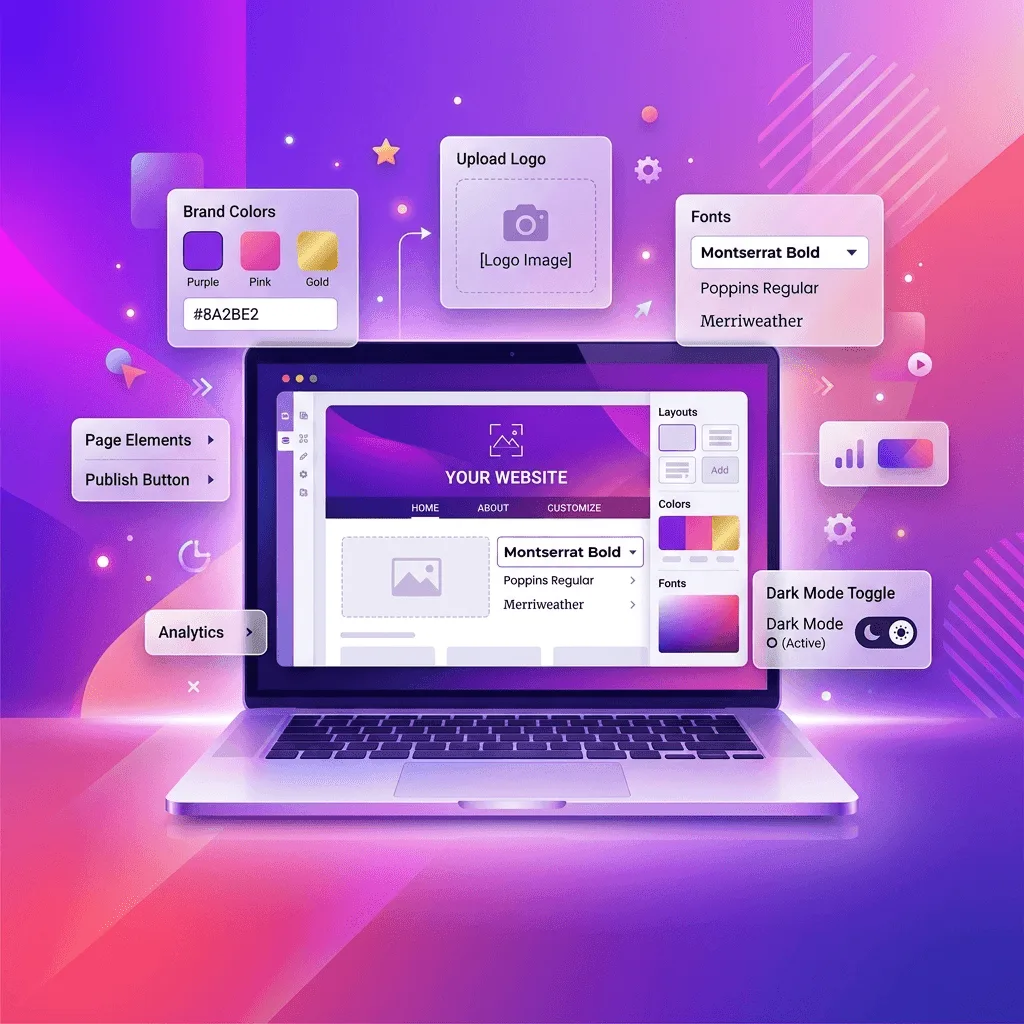
Prolaud closes that specific loop: lesson planning and deck generation run inside the same workspace that holds the course, the batch and the live class, so a plan becomes a deck becomes a class without an export step.
Where the other two win
If you need a native Android app in the Play Store under your own name, Classplus and Teachmint are built for exactly that and Prolaud is not — it is an open-web platform. And if your whole business is one self-paced course with no live teaching, the integration advantage mostly disappears; a standalone deck tool is fine.
What is the best AI setup for teaching in Hindi, Tamil, or other Indian languages?
Use Gemini or ChatGPT for drafting, ElevenLabs for voice, and a platform that can actually display the language to your students. The last step is where most setups break: tutors generate excellent Marathi content and then deliver it through an interface that only exists in English, which undercuts the entire point.
- Generation — can the model write good Bengali? Frontier models are now genuinely usable for Hindi, Bengali and Tamil, and workable for Telugu, Marathi and Gujarati.
- Speech — can you produce a natural voiceover? Multilingual synthesis has improved sharply, though prosody in Indian languages still lags English.
- Delivery — can the student read the interface in their language? This is the neglected one.
On delivery, Prolaud's student-facing interface ships in nine Indian languages — Hindi, Bengali, Tamil, Telugu, Marathi, Gujarati, Kannada, Malayalam and Punjabi — alongside English. For a tutor teaching in a regional medium that removes real friction: the parent who opens the portal sees their own script, not a language they have to navigate around.
This aligns with the direction NEP 2020 set out, which places significant weight on mother-tongue and regional-language instruction, particularly in foundational years. A stack that generates in Tamil but delivers in English-only is fighting that policy rather than supporting it.
How can AI handle student doubts and FAQs without replacing the teacher?
Use AI for the repetitive tier and keep humans on the conceptual tier. Questions about schedules, deadlines, fee status and which chapter is next can be automated safely. Questions about why a student's method produced the wrong answer should not be — that is where teaching actually happens.
| Question type | Example | Automate? |
|---|---|---|
| Logistics | “When is the next class?” | Yes — safely |
| Administrative | “Has my fee been received?” | Yes — from your own records |
| Definitional | “What does ‘refractive index’ mean?” | Yes — with review |
| Diagnostic | “Why is my answer wrong?” | No — this is teaching |
| Pastoral | “I’m falling behind and I’m worried.” | Never |
The practical method: spend a week saving every student question into a document. Most tutors find that sixty to seventy percent are the same eight questions. Draft answers to those eight yourself, have ChatGPT rewrite them into a warm, consistent voice, and publish them where students already look. You have removed most of your support load without automating a single moment of actual teaching.
Which AI video tools work on an Indian creator's budget?
Descript for editing and ElevenLabs for voice cover most needs at a fraction of studio cost. Descript's core trick — edit the transcript and the video edits itself — removes the skill barrier that stops most tutors publishing recorded lessons at all. Neither requires equipment beyond a decent microphone.
Where creators overspend is on AI avatars. A synthetic presenter reading your script is impressive for about ten seconds, after which most students find it slightly unsettling, and it removes the one thing that differentiates you from a textbook: your presence. Spend the money on a ₹3,000–₹6,000 USB microphone instead. Audio quality affects perceived teaching quality far more than video polish does.
How should Indian tutors collect fees when running an AI-assisted practice?
Collect through UPI and RuPay, issue a proper GST invoice where required, and make sure money settles into your own bank account rather than sitting in a platform's wallet. Payment friction destroys more Indian course sales than pricing does — a checkout without UPI will lose a meaningful share of buyers at the final step.
- UPI is not optional. It is the default payment behaviour in India, and an international platform that treats it as secondary will cost you completed sales.
- Invoicing. Online educational services are generally taxable in India, with specific exemptions for certain recognised institutions — the classification is fiddly.
- Settlement. Prefer arrangements where payments settle from your own gateway account directly to your bank, rather than being held and disbursed by the platform.
Not tax advice
GST treatment of online education depends on how your service and institution are classified, and the rules change. Talk to a chartered accountant about your own situation rather than trusting any blog, including this one.
How do you stop AI from damaging academic quality?
Never let AI-generated material reach a student without a teacher reading it first. This is not caution for its own sake — every current model produces fluent, confident, incorrect statements about syllabus specifics, and a wrong worked example does more damage to a student than no example at all.
- Verify against a source, not a memory. If a fact matters, check it against the NCERT chapter or the board's own document. A model's recall of syllabus detail is not evidence.
- Never paste student data into a general chatbot. Names, marks, phone numbers and parent contacts do not belong in a consumer AI tool — treat the free tier of any chatbot as a public place.
- Disclose what is AI-assisted. Students increasingly detect it anyway, and being straightforward protects your credibility.
There is also a professional-integrity dimension. If you assess student work with AI, you owe them a human review of any grade that affects them. An automatically-marked practice quiz is reasonable. An automatically-marked final assessment, unreviewed, is not — and it is exactly the shortcut that permanently damages a tutoring reputation when a parent discovers it.
What does NEP 2020 actually say about using technology in teaching?
The National Education Policy 2020 treats technology as an enabler rather than a replacement, and established the National Educational Technology Forum to guide its use. Its emphasis on competency-based assessment, multilingual instruction and teacher capacity-building is directly relevant to how a tutor should choose AI tools.
- Does it help you assess understanding rather than recall? Tools that generate conceptual and application questions serve the policy direction; more rote drill does not.
- Does it work in your students' language of instruction?
- Does it build your capability or merely substitute for it? A tool that drafts a plan you then improve makes you better. A tool that produces material you never read makes you worse.
Which two AI tools should an Indian tutor actually start with this week?
Start with NotebookLM and Gemini, in that order, and add nothing else for a month. NotebookLM keeps your content accurate to the syllabus; Gemini makes it well-taught. Together they address the largest time cost in tutoring — preparation — without introducing a tool you have to maintain or pay for.
- Week 1: Upload one chapter to NotebookLM and use it to prepare a single lesson. Compare against how you normally prepare.
- Week 2: Add Gemini for the pedagogy layer — hooks, analogies, misconceptions, exit tickets.
- Week 3: Write your eight most-asked student questions and publish the answers.
- Week 4: Record one lesson properly, with a real microphone, and edit it in Descript.
Resist adding all ten tools at once. The tutors who sustain an AI workflow are almost always the ones who adopted two tools and kept them, not the ones who adopted ten and quietly returned to doing everything by hand.
Run the class and sell the class in one place
Lesson prep, decks, live classes, storefront and UPI checkout in a single workspace — in nine Indian languages. 14-day free trial, no card.
Start your 14-day free trial
Renu Rawat
Founder of prolaud.com. Helping teachers and creators build profitable, independent learning businesses without losing a cut of every sale to platform fees.
About the founderFrequently asked questions
- Will AI replace online tutors in India?
- No — tutors who use AI will displace tutors who do not, but AI alone will not. We treat that question properly in a separate article on hybrid teaching rather than answering it twice.
- Are free AI tools good enough for a small tutoring practice?
- Yes, for most of the work. Gemini, NotebookLM, ChatGPT and Canva all have free tiers that comfortably cover a solo tutor's needs. The first thing genuinely worth paying for is usually not a smarter model but a better microphone.
- Is it safe to put student marks into ChatGPT?
- No. Treat any general-purpose chatbot as a public space. Remove names, roll numbers, contact details and anything identifying before asking for help with reports or feedback. Keep identifiable student data inside a system you control and that is contractually accountable to you.
- Which AI tools support Indian regional languages properly?
- Gemini and ChatGPT handle Hindi, Bengali and Tamil well, and are workable in Telugu, Marathi and Gujarati. ElevenLabs handles multilingual voice. The weaker link is usually the delivery platform: check that your students can read the interface itself in their language, not just your content.
- Do I need to charge GST on online courses in India?
- Often yes, though specific exemptions exist depending on how your service and institution are classified. The rules are genuinely complex and change; consult a chartered accountant about your particular case rather than relying on general guidance.
Keep reading
How to Teach Online and Earn Money in India
If you're good at something people want to learn, you can earn from it online. Here's how to turn a skill into real income in India — honestly, without the get-rich-quick nonsense.
Read
Online Tutoring Platforms in India: How to Choose and Grow
Tutoring marketplaces bring leads but take a cut and cap you at 1:1. Here's how Indian tutors can choose the right setup — and grow beyond trading hours for rupees.
Read
Will AI Replace Teachers? Why Hybrid Teaching Is the Real Success Secret in 2026
The question is asked anxiously and answered lazily — usually with reassurance nobody believes. Here is the version with the uncomfortable parts left in.
Read