For creators
How a paper is made: the bank, and the blueprint
A paper here is not a sheet of questions. It is a set of rules that says how many to draw, from which topic, at what difficulty — so two candidates sitting side by side get different papers from the same bank, marked against the same scheme.
Last updated Aug 28, 2026
Why a bank and not a document
The usual way to set a paper is to write twenty questions into a document and give every candidate the same twenty. That has two costs. The first is that the questions are used once: next term somebody writes twenty more, and the good ones from last year are in a file nobody opens. The second is that identical papers make copying worth the effort — one answer key, passed around, works for everybody.
A bank fixes both. Questions are written once and drawn from for years, and because every candidate is dealt a different selection, an answer that reaches the wrong person is worth almost nothing.
Getting questions in
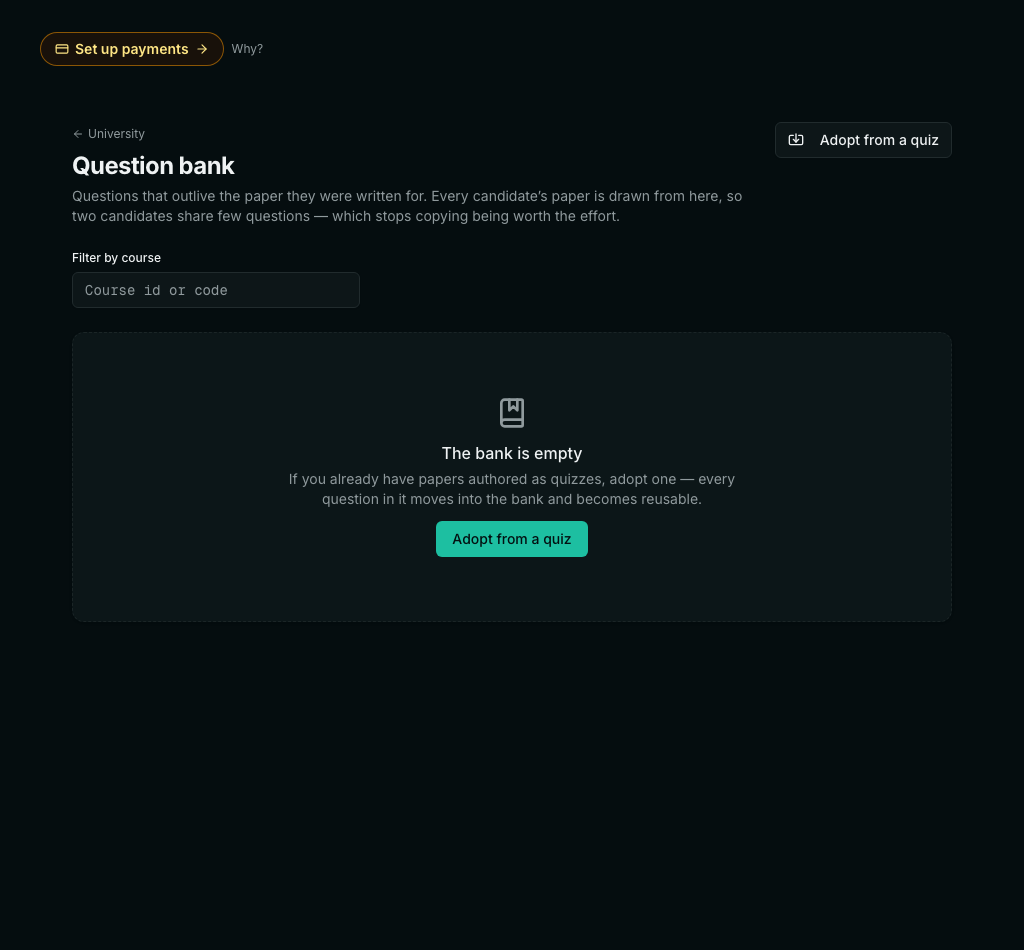
An empty bank is the normal starting point, and it offers the shortest way out of itself: adopt a quiz you have already written. Every question in it moves into the bank and becomes reusable, so a department with three years of quizzes has three years of bank without typing anything.
Tag as you go, because the blueprint draws on tags
Two fields do the work: topic and difficulty. They are not decoration — a draw rule asks for “two easy questions on data structures”, and a question with no topic is invisible to that rule. A bank tagged carelessly produces papers that are technically valid and pedagogically wrong: all four objective questions from one unit, none from the rest of the syllabus.
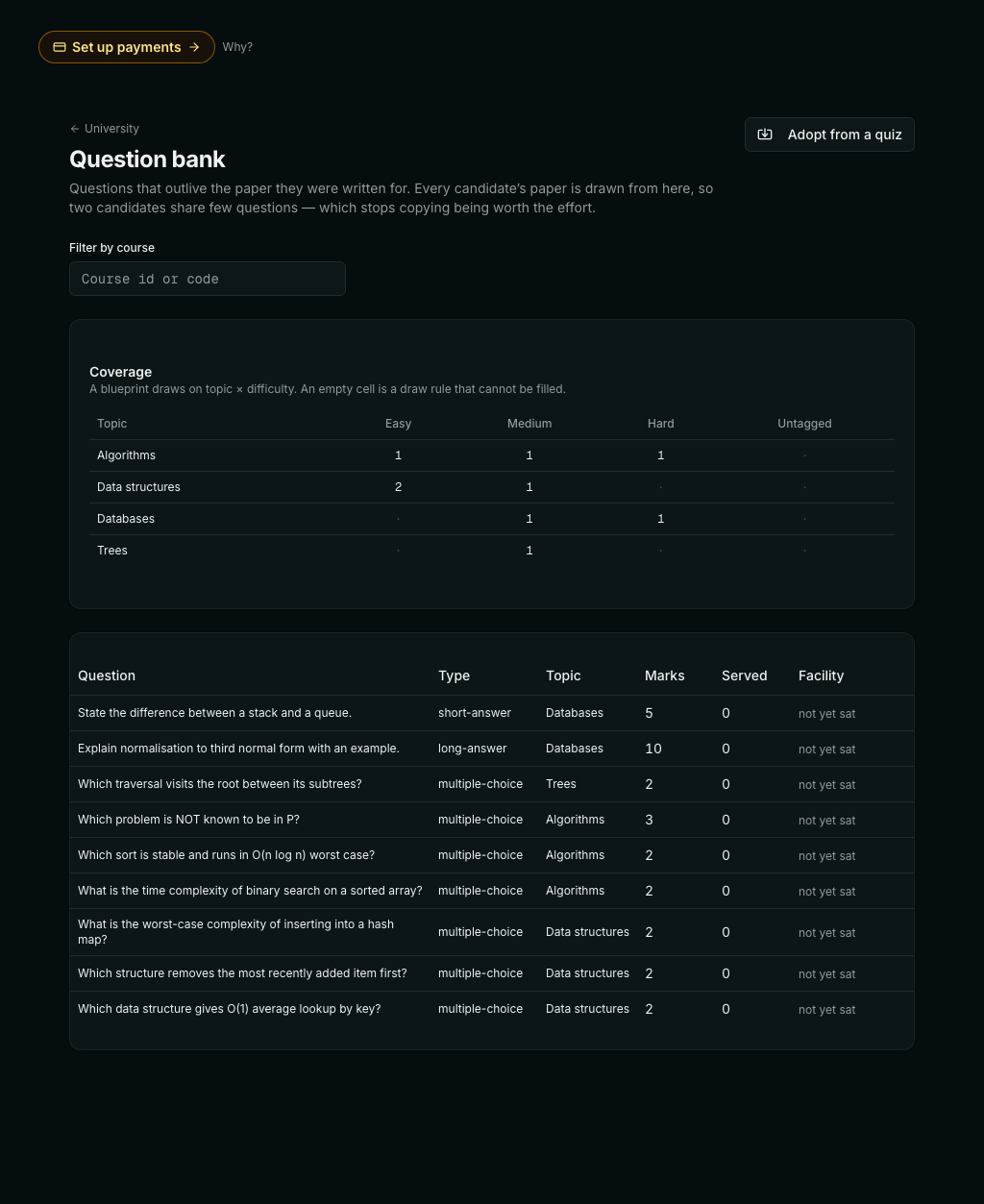
Two more columns matter over time. “Served” counts how many candidates have been dealt this question, so an over-used question is visible before it becomes the one everybody has seen. “Facility” is the proportion who got it right once it has been sat — a question at 5% is probably broken rather than hard, and one at 98% is not discriminating between candidates.
Describing the paper
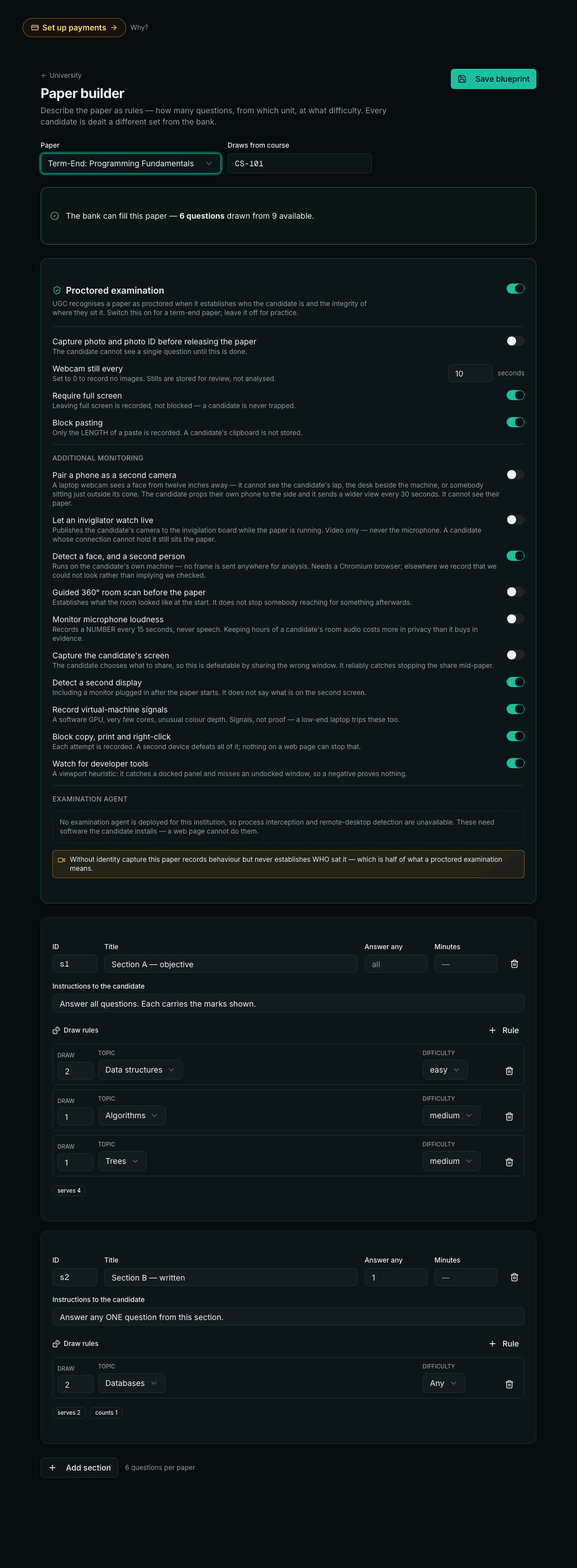
A blueprint is a list of sections, and each section is a list of draw rules. A rule says: draw this many, from this topic, at this difficulty. Leave difficulty blank and it draws from any. Sections carry their own instructions, and can be marked “answer any N” for the written half where a candidate chooses between essays.
When the bank cannot fill it
This is the failure the software is most useful for catching, because it is invisible on paper: a rule that asks for twenty hard questions on trees when the bank holds one. Left alone it does not produce an error on exam day — it produces a short paper, or the same handful of questions for everybody, and nobody notices until the marks come back strange.
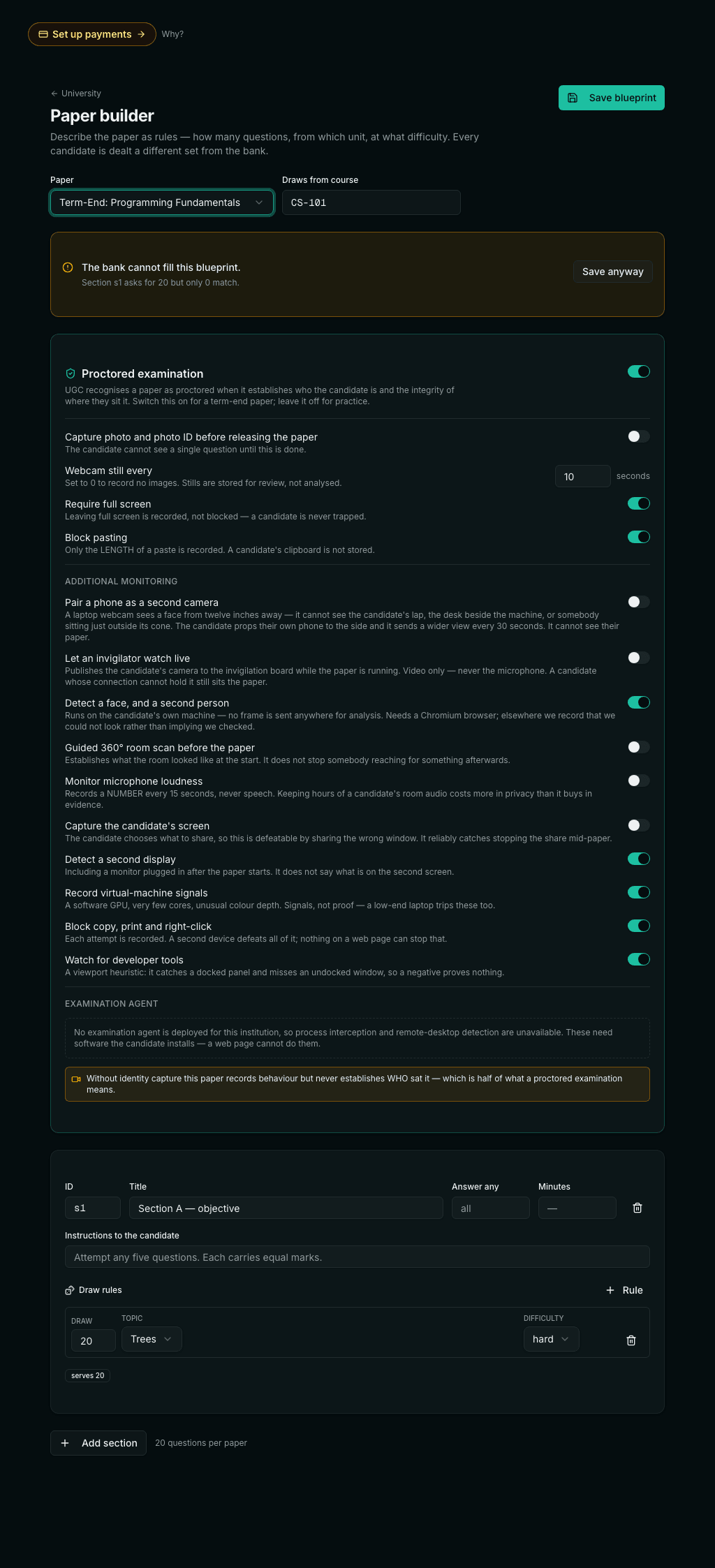
“Save anyway” exists deliberately. Writing the blueprint first and filling the bank against it is a reasonable order of work, and software that refused to store an unfinished plan would just be pushing the plan back into a spreadsheet.
- Do two candidates really get different papers?
- Yes, when the bank has more questions than the rules draw. Six drawn from nine gives a large number of distinct combinations, and shuffling a section reorders what is drawn. If the bank holds exactly as many questions as the blueprint asks for, everybody gets the same paper — which is why the coverage table is worth reading first.
- Can I still hand-pick specific questions?
- Yes. A section can name question ids directly instead of drawing. Mixing the two is normal: a compulsory case study everybody must answer, plus objective questions drawn at random.
- What happens to a question I edit after the paper has been sat?
- The sitting keeps what it served. A candidate is marked against the question as it was when they answered it — editing the bank does not rewrite anybody's completed paper.
- How many questions should a bank hold?
- Enough that the draw is not deterministic. As a rule of thumb, three to four times what a paper draws per rule: a rule asking for two easy questions on a topic wants six to eight there. Below twice, most candidates will see most of the bank.
- Can two teachers contribute to one bank?
- Yes — the bank belongs to the course, not to a person. Which is the point: it outlives whoever set this year's paper.
Related